 faqiuqi@gmail.com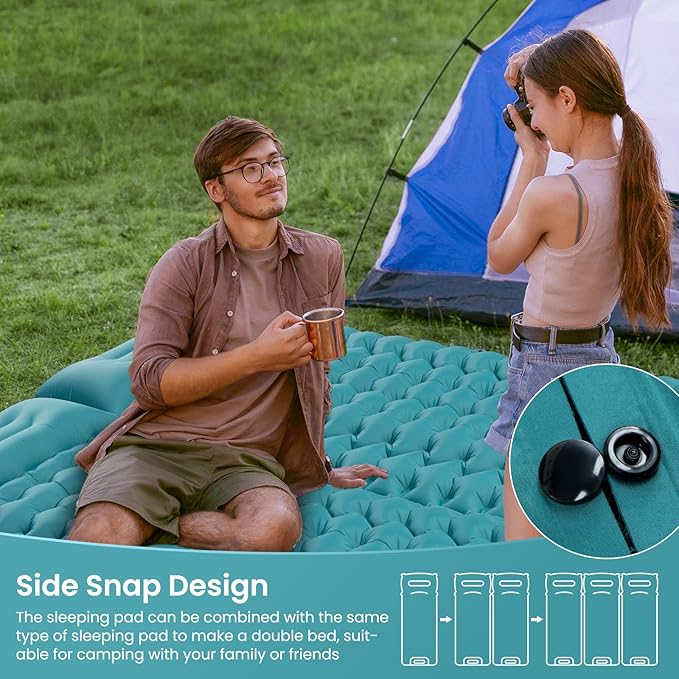
You know the feeling. It is 11 PM. You are inside your tent, exhausted from a long hike. You unroll your sleeping bag, lie down on your pad… and immediately feel a rock digging into your hip. You shift. Another rock finds your shoulder. You try your back, but the ground is uneven, and your spine is already complaining.
By 2 AM, you are lying awake, counting the hours until sunrise, swearing that next time you will just stay home.
Stop swearing. Start sleeping.
The Inflating Sleeping Pad Mattress for Camping is here to rescue your outdoor adventures. With 4 inches of extra thickness, a built‑in foot pump that inflates in just 50 seconds, and a compact pack size that defies its generous dimensions, this pad is the last camping bed you will ever need. Whether you are a solo backpacker, a couple who wants to connect two pads into a double bed, or a car camper tired of bulky air mattresses, the blue pad is your ticket to a real night’s sleep under the stars.

4 Inches of Extra Thick Support: Goodbye, Uneven Ground
Let us start with the number that changes everything: 4 inches.
Most budget camping pads give you 1.5 to 2 inches. Even “thick” pads often stop at 3 inches. The Inflating Sleeping Pad delivers a full 4 inches of air cushion. That is the difference between feeling every pebble and floating above them.
When fully inflated, the pad measures 79 inches long by 26 inches wide by 4 inches thick. At 79 inches, it fits campers up to about 6’5”. The 26‑inch width is significantly wider than the standard backpacking pad (usually 20–23 inches). That extra width means you can sleep on your back with your arms out, roll onto your side without your knees hitting the ground, or curl up without falling off.
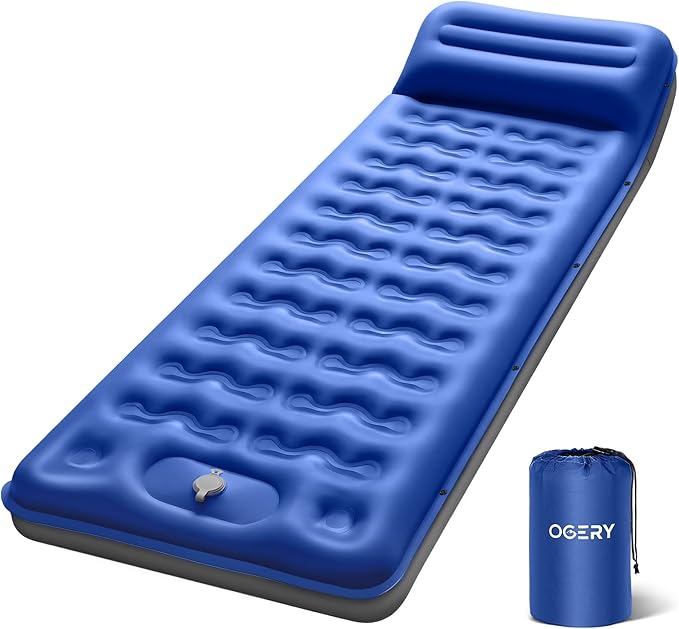
But thickness and size alone are not enough. The pad features square‑shaped air cells inside. Unlike simple flat air chambers that can bulge or sag, these square cells create a matrix of independent air pockets. When you lie down, each cell compresses only where your body applies pressure. The result is superior support that conforms to your shape without bottoming out.
What does that feel like in practice?
- Side sleepers: Your hip and shoulder sink into the cells just enough to keep your spine straight, while the surrounding cells remain firm. No more bruises.
- Back sleepers: The square cells support the natural curve of your lower back. No more waking up with a stiff spine.
- Stomach sleepers: The pad stays flat and even, preventing that uncomfortable arch in your lower back.
And there is a built‑in pillow. It is integrated into the top end of the pad, contoured to support your neck curve. No more stuffing a jacket under your head or waking up with a crick in your neck. The pillow stays where you put it—because it is part of the pad.
The manufacturer calls it a “lightweight queen size camping mattress pad.” Queen size in terms of comfort, not actual dimensions (a queen bed is 60″ wide; this is 26″ wide for a single sleeper). But the feeling is queen‑like: plush, supportive, and far from the hard ground.
Only 50 Seconds to Inflate, 1 Second to Deflate
Here is the feature that will make you the envy of every camper in the tent site: the built‑in foot pump.
No mouth blowing. No hand pump. No electric pump. No batteries. Just your foot.
Here is how it works. At the foot end of the pad, there is a separate air chamber with a one‑way valve. You open the outer flap, place your foot on the pump area, and step down. The pump chamber compresses, forcing air into the main pad. When you lift your foot, the chamber refills with fresh air through a separate intake. Step down again. Repeat.
In 50 seconds of steady stepping, the pad goes from flat to fully inflated.
Fifty seconds. That is less time than it takes to brush your teeth. It is faster than waiting for your camping stove to boil water. It is certainly faster than blowing with your mouth, which takes 2–3 minutes and leaves you dizzy.
Why is the foot pump a game‑changer?
- Hygienic. No moisture from your breath inside the pad (moisture leads to mold over time).
- No extra gear. The pump is built in. You cannot lose it, forget it, or break it.
- No batteries or electricity. Works on a mountaintop, in a desert, or during a power outage.
- Easy for anyone. Children, seniors, people with arthritis or limited lung capacity—anyone can do it.
- Fast. 50 seconds is best‑in‑class for foot‑pump pads.
Deflation is even faster: 1 second. Open the deflation valve (usually a separate plug), and the air rushes out instantly. Press the pad flat with your hands or knees, roll it up, and you are done. No wrestling with half‑deflated balloons.
The pad holds air reliably thanks to high‑quality valves and the TPU coating. You will not wake up at 3 AM on a flat pad. The air stays where it belongs—under you.
Durable and Waterproof: 50D Nylon with TPU Coating
Camping pads die in two ways: punctures from sharp objects and moisture damage. The Inflating Sleeping Pad is built to survive both.
The material is 50D nylon. 50 denier is significantly thicker than the 20D or 30D used on ultralight pads. That extra thickness translates directly into tear resistance. You can use this pad on rocky ground, gravel, dry desert sand, or forest floors covered in pine needles. Clear away the obvious sharp rocks, but do not lose sleep over every tiny pebble.
The TPU coating (thermoplastic polyurethane) is the gold standard for inflatable gear. It bonds strongly to nylon, remains flexible, and provides a waterproof barrier. If your tent floor gets wet from condensation or a small leak, the pad acts as a vapor barrier. You stay dry. Your sleeping bag stays dry.
TPU is also more environmentally friendly than some other coatings (hence “eco‑friendly” in similar products). It resists delamination and cracking over time.
The pad is easy to clean and washable. A damp cloth removes dirt, mud, and spills. For deeper cleaning, you can hand‑wash with mild soap and water (avoid harsh detergents). Rinse thoroughly and air dry completely before storing.
The ergonomic design ensures a good night’s sleep even on rough ground. The combination of 4‑inch thickness, square air cells, and built‑in pillow means your body is isolated from the terrain below. You will not feel the root that runs under your tent. You will not notice the slight slope. You will just sleep.
Perfect for Camping: Lightweight and Compact
Now for the numbers that matter when you are carrying everything on your back.
The Inflating Sleeping Pad weighs only 3.3 pounds. For a pad that is 4 inches thick, 79 inches long, and 26 inches wide, that is impressively light. Compare this to a traditional self‑inflating foam pad of similar size (which could weigh 5+ pounds) or a cheap vinyl air mattress (often 6+ pounds).
When deflated and folded, the pad packs down to approximately 12.6 inches by 6 inches. That is about the size of a small loaf of bread or a large water bottle. It slides easily into a backpack’s main compartment, fits in a side pocket, or straps to the outside of a daypack.
Who is this pad for?
Backpackers: At 3.3 lbs, it is heavier than an ultralight pad (which might be 1.5 lbs). But for many backpackers, the trade‑off is worth it. You get 4 inches of thickness, a built‑in pillow, and foot pump convenience. For short trips (2–3 nights) or basecamp setups, it is a luxury worth carrying.
Car campers: The weight and pack size are irrelevant. Throw it in the trunk. You will appreciate the comfort far more than you will notice the bulk.
RV and van travelers: Space is at a premium in a camper van or RV. This pad folds small and inflates quickly. Use it as a guest bed, a floor mattress for kids, or an extra layer on top of an existing RV mattress.
Beach trips: Take it to the beach as a comfortable lounger. The waterproof material resists sand and salt. Wipe it off before packing.
Travel and hostels: Backpackers staying in hostels sometimes encounter dirty or lumpy mattresses. This pad provides a clean, comfortable sleeping surface. It packs small enough for carry‑on luggage.
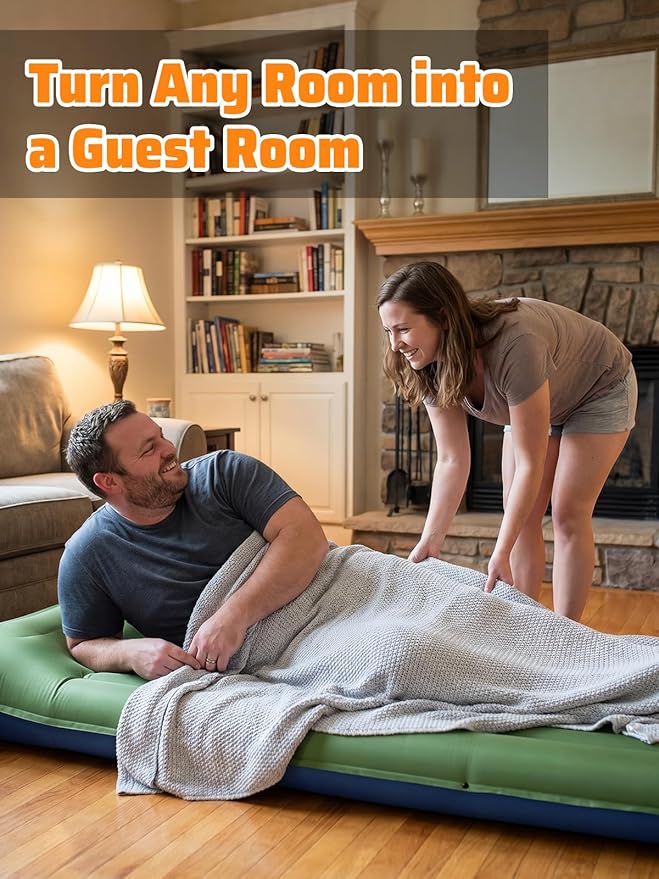
Home guest bed: When friends or family stay over and you lack a spare bed, this pad is far better than a cheap inflatable. It is thick, quiet, and comfortable.
The product description mentions “hiking, camp, travel, backpacking, beach trips, car journeys, RV adventures, and outdoor excursions.” That covers almost any scenario where you need to sleep away from home.
Perfect for Adults, Campers, and More: Connect Two for a Double Bed
One of the smartest features of this pad is the buttons on its sides.
These buttons allow you to easily attach one pad to another, creating a double camping bed. Two pads connected side by side give you a combined width of 52 inches (26″ + 26″). That is just slightly narrower than a standard double mattress (54″) and wider than a twin. Two adults can sleep comfortably with their own separate air chambers.
Why is this better than a single double pad?
- Individual support. Each person’s weight compresses only their own pad. When one person rolls over, the other does not feel it. No more waterbed effect.
- Easy to carry. Two people can each carry their own pad (3.3 lbs each). A single double pad often weighs 5‑7 pounds and is awkward to pack.
- Versatility. When you camp solo, you bring one pad. When you camp with a partner, you bring two and connect them. No need to buy a separate double pad.
- No cold gap. Unlike two separate pads that slide apart, the buttons keep the pads locked together. No cold air sneaks through the middle.
This feature is ideal for:
- Couples who want to sleep together without fighting over separate pads.
- Parents camping with a child (connect one adult pad to one child pad—though note that child pads would need the same button system).
- Friends sharing a tent who want a wider sleeping platform.
- Group camping where you create a giant bed by connecting several pads.
The buttons are simple to use. Align the edges, press firmly, and they snap into place. To separate, pull gently from the corners. The connection is secure during sleep but releases easily when you pack up.
Even if you never use the connection feature, the pad works perfectly as a spacious single mat. The 26‑inch width gives solo campers room to spread out. No more feeling confined to a narrow mummy‑shaped pad.
Who Is This Pad For? A Detailed Breakdown
The side sleeper with hip pain.
You have tried thin pads. You have tried folding jackets under your hip. Nothing works. The 4‑inch thickness and square air cells of this pad are specifically designed to cradle your hip and shoulder. You will wake up without bruises for the first time in years.
The backpacker who wants comfort without massive weight.
You are not an ultralight gram‑counter, but you also do not want to carry a 10‑lb air mattress. At 3.3 lbs, this pad strikes the perfect balance. You get serious comfort for a reasonable weight penalty.
The couple who camps together.
Buy two pads. Connect them. Enjoy the best of both worlds: individual support and shared sleeping space. No more cold gaps, no more motion transfer, no more fighting over who gets the better pad.
The car camper upgrading from a cheap air mattress.
You know the ones: they leak, they are loud, and they take forever to inflate with a noisy electric pump. This pad inflates silently with your foot, holds air all night, and packs down to a fraction of the size. Your trunk will thank you.
The parent camping with kids.
Kids do not stay on narrow pads. The 26‑inch width gives them room to wiggle. The foot pump is easy enough for older kids to operate themselves. And the durable 50D nylon survives snacks, toys, and general chaos.
The RV or van lifer.
Space is precious. A pad that folds to 12.6″ x 6″ can be stored in a drawer or cabinet. Use it as a guest bed, an extra layer for cold nights, or a comfortable mat for sitting around the campfire.
The festival goer.
Music festivals mean camping on rough, uneven fields. You need a pad that inflates fast without electricity, keeps you off the muddy ground, and packs small for the walk from the parking lot. This pad checks every box.
The guest room hero.
Stop making your guests sleep on a lumpy sofa or a thin foam mat. Give them this pad. They will actually sleep well. And because it packs small, you can store it in a closet between visits.
Step‑by‑Step: How to Use Your New Pad
Inflation:
- Unroll the pad on a flat, clean surface.
- Locate the built‑in foot pump at the foot end. Open the outer flap.
- Place your foot on the pump area. Step down firmly.
- Lift your foot. The pump chamber refills with air.
- Repeat stepping for about 50 seconds. The pad will become firm.
- Close the inflation valve securely (if separate from the pump). Close the outer flap.
Deflation:
- Open the deflation valve (usually a separate large plug).
- Press the pad flat with your hands or knees. Air rushes out in about 1 second.
- Roll the pad from the head end toward the foot end to expel any remaining air.
- Close the deflation valve. Fold or roll the pad, then place it in the storage bag.
Connecting two pads:
- Inflate both pads fully.
- Align the side edges with the buttons facing each other.
- Press the buttons together firmly until they snap into place.
- To separate, gently pull the pads apart from the corners.
Cleaning:
- Wipe the pad with a damp cloth. For stubborn dirt, use mild soap and water.
- Do not submerge the pad fully. Do not use bleach or harsh detergents.
- Rinse with clean water if soap was used. Air dry completely before storing.
Storage:
- Ensure the pad is completely dry.
- Leave the valves open to allow any residual moisture to escape.
- Store unrolled if possible. If you must roll it, roll loosely.
- Keep away from extreme heat, sharp objects, and pets.
Comparison: How This Pad Stacks Up
| Feature | This 4″ Pad | Typical Budget Pad ($30‑50) | Premium Pad ($100‑150) |
|---|---|---|---|
| Thickness | 4 inches | 1.5‑2 inches | 2.5‑3 inches |
| Width | 26 inches | 20‑22 inches | 23‑25 inches |
| Length | 79 inches | 72‑75 inches | 75‑78 inches |
| Weight | 3.3 lbs | 1.5‑2 lbs | 1.8‑2.5 lbs |
| Packed size | 12.6″ x 6″ | 10″ x 4″ | 9″ x 4″ |
| Inflation method | Built‑in foot pump (50s) | Mouth or separate pump | Usually mouth or pump sack |
| Pillow | Built‑in | None | Sometimes separate |
| Air cell design | Square‑shaped cells | Flat chamber | Variable (sometimes zoned) |
| Material | 50D nylon + TPU | 30D or 40D nylon | 40D with TPU |
| Connection buttons | Yes (create double bed) | Rare | Rare |
| Weight capacity | Not specified, likely 300‑400 lbs | 200‑300 lbs | 300‑350 lbs |
This pad wins on thickness (4 inches is rare in this price range), convenience (50‑second foot pump), and connectivity (buttons for double bed). The 3.3‑lb weight is reasonable given the 4‑inch thickness and 26‑inch width.
Potential Drawbacks (Honest Assessment)
- Weight: At 3.3 lbs, it is not ultralight. For long thru‑hikes where every ounce matters, a lighter pad might be preferable. But for weekend trips, car camping, or basecamps, the weight is a fair trade for comfort.
- Pack size: 12.6″ x 6″ is small for a 4‑inch pad, but it is still larger than an ultralight pad that packs to the size of a soda can. Make sure your backpack has room.
- Foot pump requires firm ground. On very soft surfaces (deep sand, thick duff), the pump may not draw air efficiently. Spread a groundsheet or move to a harder spot. In an emergency, you can still blow into the main valve.
- Built‑in pillow is fixed. Some people prefer removable pillows. You cannot remove this one. However, you can deflate it partially or add a second pillow on top.
- Connection buttons are specific to this brand. You cannot connect to pads from other manufacturers. If you want a double bed, buy two of these pads.
None of these are deal‑breakers. They are honest trade‑offs for a pad that delivers exceptional comfort and convenience at a reasonable price.
Pro Tips for Maximum Longevity
- Always clear your tent floor. Even with 50D nylon, a sharp rock can puncture any pad. Take 30 seconds to sweep the tent floor with your hand.
- Do not over‑inflate. The foot pump gives you plenty of air. Stop when the pad feels firm but not drum‑tight. Over‑inflation stresses the seams.
- Store unrolled with valves open. This is the golden rule for all inflatable pads. Rolling tightly for long periods stresses the material. If you have space, lay the pad flat under a bed or hang it in a closet.
- Dry completely before storing. Moisture is the enemy. After a trip, inflate the pad and let it air out for an hour. Wipe away any visible dampness.
- Use the repair kit if needed. The pad comes with a repair kit (likely patches). Small punctures are easy to fix. Clean the area, apply the patch, and wait the recommended time.
- Keep away from extreme heat. Do not leave the pad in a hot car (interior can exceed 150°F). Heat can damage the TPU coating.
- Do not use sharp objects near the pad. Be careful with knives, tent stakes, and pet claws.
Final Verdict: Your Ticket to 50‑Second Comfort
The Inflating Sleeping Pad Mattress for Camping solves the three biggest camping sleep problems: thinness, inflation hassle, and inadequate width.
At 4 inches thick, it lifts you off uneven ground. The square air cells and built‑in pillow provide support for back, side, and stomach sleepers. The built‑in foot pump inflates the pad in just 50 seconds—no mouth, no pump, no batteries. The 26‑inch width gives solo campers room to move, and the side buttons let you connect two pads into a double bed for couples. The 50D nylon with TPU coating resists tears and water, surviving real‑world outdoor abuse. And at 3.3 pounds with a 12.6″ x 6″ pack size, it is portable enough for backpacking and convenient enough for car camping.
Whether you are a solo adventurer, a couple who camps together, a parent, a festival goer, or someone who just wants a comfortable guest bed for the floor, this blue pad delivers.
Stop suffering through bad nights. Stop waking up with a sore hip. Stop listening to your partner complain about the cold gap. Click the button, add to cart, and the next time you zip up your tent, you will actually look forward to lying down.
Because camping should be about the stars, the stories, and the fire—not the ache in your back.
— Inflate in 50 seconds. Sleep like royalty. Adventure far.