 faqiuqi@gmail.com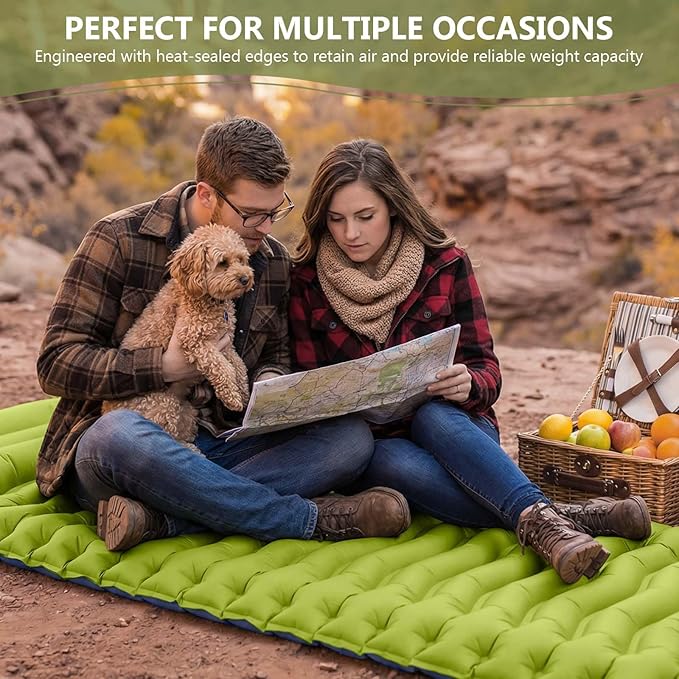
You are lying in your tent. The stars are beautiful outside. The air is crisp. But you are not enjoying any of it. Because your hip is pressed against a rock that you somehow missed, your neck is at a painful angle, and the thin foam pad beneath you might as well be made of cardboard.
You shift to your back. Now your lower spine arches uncomfortably. You try your stomach. Now you cannot breathe. You give up and stare at the ceiling of your tent until dawn.
That was the old way of camping.
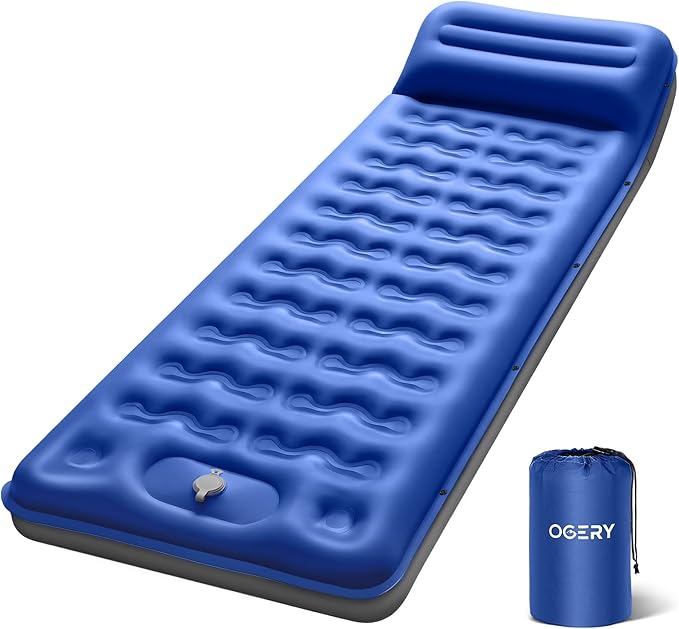
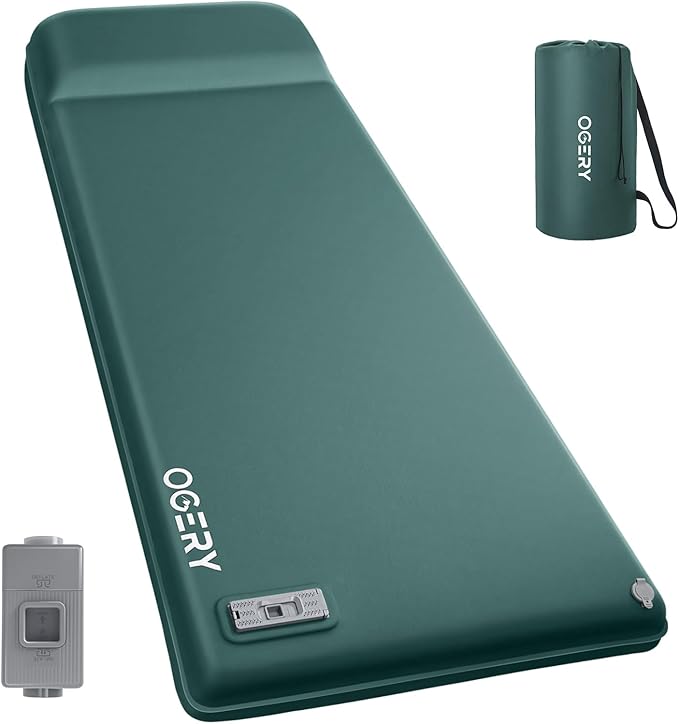
The new way is the Ultralight Camping Sleeping Pad in green. At 4 inches thick, with a wave‑shaped surface, a built‑in pillow, and a foot pump that inflates it in 1–2 minutes, this pad turns your tent floor into a bedroom. It weighs only 1.58 pounds, packs down to the size of a small water bottle, and supports up to 800 pounds. Whether you are a solo backpacker, a side sleeper with a bad back, or a parent looking for a comfortable guest bed, this green pad is your answer.
Let me walk you through why this might be the last sleeping pad you ever buy.

Designed for Outdoor Comfort: 4 Inches of Lift, Wave‑Shaped Support
Let us start with the dimensions that actually matter when you are lying on the ground.
The pad inflates to 75 inches long by 25.6 inches wide by 4 inches thick. That length fits most people up to about 6’2”. The width—25.6 inches—is significantly wider than the standard backpacking pad (which is typically 20–23 inches). You get almost 3 to 5 extra inches of shoulder and elbow room. You can sleep on your back with your arms out. You can roll onto your side without your knees hitting the ground.
But the real star is the 4‑inch thickness. Most budget pads give you 1.5 to 2 inches. Even “thick” pads often stop at 3 inches. Four inches is a different category entirely. It lifts your body completely off the ground. That rock you missed? You will not feel it. That root running under your tent? It might as well be a hundred feet below.
However, thickness alone is not enough. Many thick pads still feel like lying on a balloon—unstable, bouncy, and unsupportive. The manufacturer solved this with an innovative wave‑shaped surface.
Instead of a flat, uniform air chamber, the top of the pad has gentle waves that run from head to toe. These waves serve two purposes. First, they relieve pressure on your back and neck by distributing your weight across multiple contact points. Second, they improve airflow under your body, which helps regulate temperature.
What does this feel like in practice?
- Back sleepers: The waves support the natural curve of your spine. Your lower back does not hang unsupported. Your neck stays aligned with your shoulders.
- Side sleepers: Your hip and shoulder sink into the valleys of the waves, while the peaks provide lift. The result is a cradling effect that eliminates pressure points. No more waking up with a bruised hip.
- Stomach sleepers: The wave pattern keeps your torso level, preventing that uncomfortable lower‑back arch that plagues stomach sleepers on flat pads.
The pad also includes a built‑in pillow. It is integrated into the head end of the pad, contoured to support your neck curve. The pillow is not an afterthought—it is part of the wave‑shaped design, flowing seamlessly from the body section. You will not need to stuff a jacket under your head or wake up with a stiff neck.
The manufacturer calls this pad an “excellent alternative to a cot mattress” and notes it works “perfectly as a standalone camping bed.” They are right. With 4 inches of thickness and ergonomic waves, you are not sleeping “on the ground.” You are sleeping above it.
Fast Inflation with Built‑in Pump: 1–2 Minutes, No Lung Power
Now let us talk about the feature that will save your breath (literally): the built‑in foot pump.
Here is how it works. At the foot end of the pad, there is a separate air chamber with a one‑way valve. You open the outer flap, place your foot on the pump area, and step down. The pump chamber compresses, forcing air into the main pad. When you lift your foot, the chamber refills with fresh air through a separate intake. Step down again. Repeat.
In 1–2 minutes of steady stepping, the pad goes from flat to fully inflated.
One to two minutes. That is faster than you can unpack your tent. It is faster than most people can blow up a pad with their mouth (which takes 3–5 minutes and leaves you dizzy). It is certainly faster than digging out a hand pump or searching for batteries for an electric pump.
Why is the foot pump such a breakthrough?
- No mouth contact. No moisture inside the pad (moisture leads to mold and mildew over time). No dizziness. No sharing saliva with your gear.
- No extra pump to carry. The pump is built in. You cannot lose it, forget it, or break it. Saves weight and pack space.
- No batteries or electricity. Works on a mountaintop, in a desert, during a power outage, or anywhere else.
- Easy for anyone. Children, seniors, people with arthritis, people with limited lung capacity—anyone can do it. Just step.
- Fast. 1–2 minutes is competitive with electric pumps (which need setup time and cords).
The valve is leak‑proof and reliable. Once the pad is inflated, you close the main valve (or the pump chamber valve), and the air stays put. You will not wake up at 3 AM on a deflated pad. The manufacturer has rigorously heat‑sealed the edges and used high‑quality materials to ensure airtight security.
Deflation is equally fast: seconds. Open the deflation valve (usually a separate large plug), press the pad flat, and the air rushes out. Roll it up, stuff it into its storage bag, and you are done.
This quick setup and takedown makes the pad ideal for:
- Road trips where you set up and break down camp every day.
- Car camping where you want to spend less time on gear and more time enjoying the outdoors.
- Backpacking where every minute of setup matters.
- Travel where you might be moving from hostel to hostel or hotel to hotel.
Lightweight & Portable: 1.58 Pounds, Water‑Bottle Size
At this point, you might be thinking: 4 inches thick, wave‑shaped surface, built‑in pillow and pump—this thing must be huge and heavy.
Wrong. The pad weighs only 1.58 pounds (about 717 grams). That is lighter than many standard backpacking pads that are only 2 inches thick. For comparison, a full 1‑liter Nalgene water bottle weighs about 2.2 pounds when full. This pad is lighter than a full water bottle.
When deflated and folded, the pad measures approximately 11 inches by 4.7 inches by 4.7 inches. That is about the size of a small water bottle or a large coffee mug. It slides easily into:
- The side pocket of a hiking backpack
- The main compartment of a 30‑liter daypack
- A carry‑on suitcase
- A bicycle pannier
- The glove compartment of a car (almost)
The included storage bag (or the pad’s own folding design) keeps it compact and protected. You can strap it to the outside of your pack or bury it deep inside. Either way, you will barely notice it is there until you need it.
For backpackers, this weight and pack size are a dream. You get serious comfort—4 inches, wave support, pillow—for a weight penalty that is minimal compared to the benefits. For car campers, it is even easier: throw it in the trunk and forget about it until bedtime.
For travelers, the compact size means you can bring your own comfortable sleeping surface anywhere. Hostel mattresses too lumpy? Hotel pillows too flat? Unroll your pad on top of the bed. You will sleep like royalty.
75D Polyester Pongee & Multi‑Layer TPU: Built to Last (and Hold 800 lbs)
Now let us talk about durability. A comfortable pad is useless if it pops the first time you use it on rocky ground.
The sleeping pad is constructed from 75D polyester pongee with multi‑layer TPU lamination. Let me break down why this matters.
75D (denier) is significantly thicker than the 20D or 30D used on ultralight pads. 75D nylon or polyester is tough. It resists tears, abrasion, and punctures much better than thinner fabrics. You can use this pad on gravel, rocky tent sites, dry desert sand, or forest floors covered in pine needles. Clear away the obvious sharp rocks, but do not lose sleep over every tiny pebble.
Polyester pongee is a type of woven fabric known for its softness and durability. Unlike some nylons that feel crinkly or plasticky, pongee has a softer hand feel. It is quiet. You will not sound like a bag of potato chips every time you move.
The multi‑layer TPU lamination (thermoplastic polyurethane) is the waterproof, airtight layer that bonds to the polyester. TPU is the gold standard for inflatable gear. It is flexible, strong, and resistant to delamination. Multiple layers mean extra protection against leaks.
The result is a pad that can support up to 800 pounds. Yes, you read that correctly. Eight hundred pounds. That is enough for two large adults, or one adult plus two children, or a solo camper who just wants to know the pad will never bottom out. For comparison, most camping pads top out at 300–400 pounds.
The edges are rigorously heat‑sealed. Heat sealing creates a permanent bond between the layers of material. It is stronger than glue or stitching (which can create needle holes that leak). Heat‑sealed edges resist leaks and tears even in the toughest conditions—cold weather, rough terrain, or heavy use.
Cleaning is simple. The waterproof surface wipes clean with a damp cloth. Mud, dirt, sand, or spilled coffee come right off. Do not use harsh detergents or submerge the pad. Just wipe, air dry, and store.
Your Comfort, Anywhere: Beyond the Campground
The manufacturer emphasizes that this mat “isn’t just for camping.” And they are right. The combination of comfort, portability, and quick inflation makes it useful in dozens of scenarios.
Beach vacations: Resort beds are sometimes too soft or too hard. Lay this pad on top of the bed for a familiar sleeping surface. Or take it to the beach as a comfortable lounger. The 75D polyester resists sand and salt.
Hiking and hunting: Long days in the field require good sleep. This pad packs small enough for a hunting pack and inflates quietly (no noisy electric pump). Set it up in a hunting tent or under a tarp.
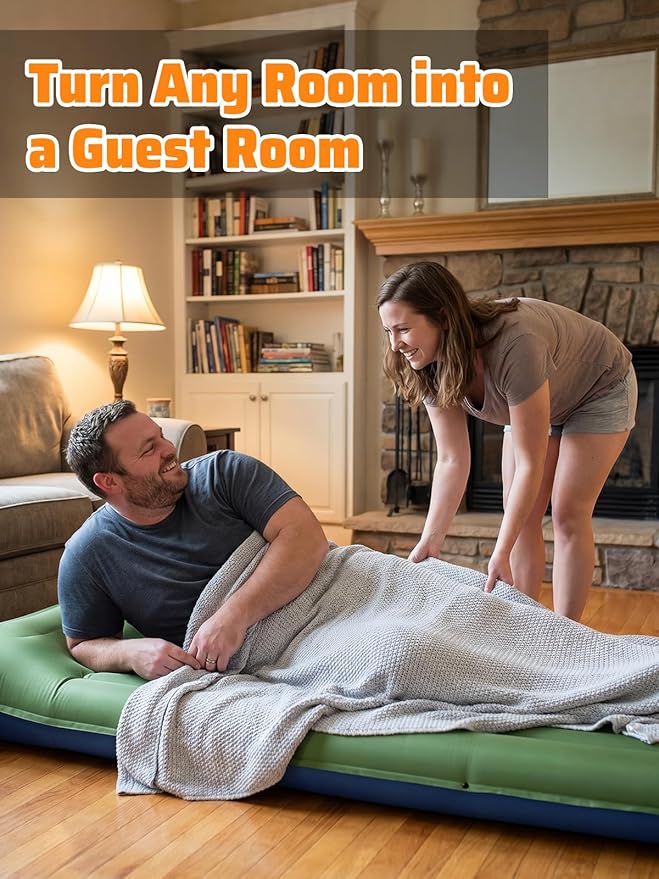
Emergency bedding at home: Power outage? Unexpected guests? Renovations making your bedroom unusable? This pad turns any floor into a bed. Keep one in your emergency kit.
Balcony or yard lounging: On a warm evening, take the pad outside. Lie down, watch the stars, read a book, or take a nap. The built‑in pillow means you do not need to bring anything else.
Backyard staycation: Kids love camping in the backyard. Give them this pad. It is thick enough to keep them off the damp grass and comfortable enough that they will actually sleep (instead of coming inside at 10 PM).
Hostel travel: Backpackers know that hostel mattresses vary wildly. Some are fine; others are torture. Bring your own pad. Inflate it on top of the hostel bed. You now have a clean, comfortable, familiar sleeping surface. The compact pack size fits in a carry‑on.
Car camping with a partner: Buy two pads. Use the side buttons (if equipped—check the specific model) or just place them side by side. Two pads give each person independent support while keeping you close.
RV and van life: Space is precious. A pad that packs to 11″ x 4.7″ can be stored in a drawer or cabinet. Use it as a guest bed, an extra layer on cold nights, or a comfortable mat for sitting around the campfire.
The manufacturer summarizes it perfectly: “Wherever you need comfort, it’s there.”
Who Is This Sleeping Pad For?
The side sleeper with chronic hip or shoulder pain.
You have tried everything. Thin pads, thick pads, foam toppers. Nothing worked. The 4‑inch thickness combined with the wave‑shaped surface is specifically designed for side sleepers. Your hip and shoulder will sink into the waves, not into the ground. Try it for one night. You will feel the difference.
The ultralight backpacker who misses comfort.
You have been sleeping on a 1‑inch foam pad for years because “every ounce counts.” But you are tired of waking up sore. This pad gives you 4 inches of comfort for only 1.58 pounds. That is a trade‑off most backpackers will happily make, especially for trips shorter than a week.
The couple who camps together but hates sharing a single double pad.
Buy two of these pads. Each person carries one (1.58 lbs each). At camp, place them side by side. You get independent support (no motion transfer) and no cold gap. It is the best of both worlds.
The parent who camps with young kids.
Kids do not stay on narrow pads. The 25.6‑inch width gives them room to wiggle. The foot pump is easy enough for older kids to operate themselves. And the 75D polyester survives snacks, toys, and general chaos. For toddlers, connect two pads side by side to make a wide, safe sleeping area.
The car camper upgrading from a cheap air mattress.
You know the ones: they leak, they are loud, they take forever to inflate with a noisy electric pump, and they are huge when packed. This pad inflates silently with your foot, holds air all night, packs down to the size of a water bottle, and weighs almost nothing. Your trunk will thank you.
The traveler and hostel hopper.
You never know what kind of bed you will get. Bring your own insurance policy. This pad fits in carry‑on luggage. Inflate it on top of any mattress (or directly on the floor) for guaranteed comfort. The built‑in pillow means you do not need to trust hostel pillows.
The home dweller who needs a spare bed.
Stop making your guests sleep on a lumpy sofa or a thin foam mat. Give them this pad. They will actually sleep well. And when guests leave, you store the pad in a closet. It takes up less space than a pair of boots.
The large or heavy sleeper.
If you weigh over 250 pounds, most camping pads will bottom out. This pad supports up to 800 pounds. You will never touch the ground. Period.
Step‑by‑Step: How to Get the Best Results
Inflation:
- Unroll the pad on a flat, clean surface.
- Locate the built‑in foot pump at the foot end. Open the outer flap.
- Place your foot on the pump area. Step down firmly.
- Lift your foot. The pump chamber refills.
- Repeat stepping for 1–2 minutes. The pad will become firm.
- Close the inflation valve (if separate). Close the outer flap.
Deflation:
- Open the deflation valve (usually a large plug).
- Press the pad flat with your hands or knees. Air escapes in seconds.
- Roll the pad from the head end toward the foot end to expel remaining air.
- Close the valve. Fold or roll the pad, then place it in the storage bag.
Cleaning:
- Wipe with a damp cloth. For stubborn dirt, use mild soap and water.
- Do not submerge the pad fully. Do not use bleach or harsh detergents.
- Rinse if soap was used. Air dry completely before storing.
Storage:
- Ensure the pad is completely dry.
- Leave the valves open to allow any residual moisture to escape.
- Store unrolled if possible. If you must roll it, roll loosely.
- Keep away from extreme heat, sharp objects, and pets.
Comparison: How This Pad Stacks Up
| Feature | This Green Pad | Typical Budget Pad ($40‑60) | Premium Ultralight Pad ($120‑180) |
|---|---|---|---|
| Thickness | 4 inches | 1.5‑2 inches | 2.5‑3 inches |
| Width | 25.6 inches | 20‑22 inches | 23‑25 inches |
| Weight | 1.58 lbs | 1.5‑2 lbs | 1.2‑1.8 lbs |
| Packed size | 11″ x 4.7″ | 10″ x 4″ | 8″ x 4″ |
| Inflation method | Built‑in foot pump (1‑2 min) | Mouth or separate pump | Usually mouth or pump sack |
| Pillow | Built‑in, contoured | None | Often separate or none |
| Surface design | Wave‑shaped (pressure relief) | Flat | Sometimes zoned |
| Material | 75D polyester pongee + multi‑layer TPU | 30D‑40D nylon | 40D nylon with TPU |
| Weight capacity | 800 lbs | 250‑300 lbs | 300‑350 lbs |
| Heat‑sealed edges | Yes | Sometimes | Usually |
This pad wins on thickness (4 inches is rare), weight capacity (800 lbs is exceptional), material durability (75D vs. 30D‑40D), and convenience (foot pump + built‑in pillow). The 1.58‑lb weight is competitive even with premium pads that offer far less thickness.
Potential Drawbacks (Honest Assessment)
- Foot pump requires firm, flat ground. On very soft surfaces (deep sand, thick pine duff), the pump may not draw air efficiently. Spread a groundsheet or move to a harder spot. In an emergency, you can still blow into the main valve.
- 1‑2 minutes is fast, but 50 seconds is faster. Some competing pads claim 50‑second inflation. The difference is negligible in real‑world use. Both are far better than mouth inflation.
- Wave surface is not for everyone. Some sleepers prefer a completely flat surface. Most people find the waves comfortable, but if you are very sensitive to texture, you might want to test it first (or trust the overwhelmingly positive reviews).
- Built‑in pillow is fixed. You cannot remove it. If you prefer a very flat head area, you may need to deflate the pillow section partially or add a second pillow on top.
- 25.6‑inch width is generous for one but not wide enough for two. For couples, buy two pads and place them side by side. Do not try to share a single pad unless you are both very small.
None of these are deal‑breakers. They are honest trade‑offs for a pad that delivers exceptional comfort, durability, and portability at a reasonable price.
Pro Tips for Maximum Longevity
- Clear your tent floor. Even with 75D polyester, a sharp rock can puncture any pad. Sweep the floor with your hand before laying down the pad.
- Do not over‑inflate. The foot pump gives you plenty of air. Stop when the pad feels firm but not drum‑tight. Over‑inflation stresses the seams.
- Store unrolled with valves open. This is the golden rule for all inflatable pads. Rolling tightly for long periods stresses the material. If you have space, lay the pad flat under a bed or hang it in a closet.
- Dry completely before storing. Moisture is the enemy. After a trip, inflate the pad and let it air out for an hour. Wipe away any visible dampness.
- Use the repair kit if needed. The pad likely comes with patches (check the package). Small punctures are easy to fix. Clean the area, apply the patch, and wait the recommended time.
- Keep away from extreme heat. Do not leave the pad in a hot car (interior can exceed 150°F). Heat can damage the TPU lamination.
- Do not use sharp objects near the pad. Be careful with knives, tent stakes, and pet claws.
Final Verdict: Your Green Ticket to Real Sleep Outdoors
The Ultralight Camping Sleeping Pad (Green) solves the four biggest camping sleep problems: thinness, inflation hassle, pressure points, and bulk.
At 4 inches thick, it lifts you off rocks and roots. The wave‑shaped surface and built‑in pillow cradle your hips, shoulders, and neck—whether you sleep on your back, side, or stomach. The built‑in foot pump inflates the pad in 1–2 minutes: no mouth, no pump, no batteries. At 1.58 pounds and 11″ x 4.7″ packed, it is lighter and smaller than many pads half as thick. The 75D polyester pongee with multi‑layer TPU resists tears, supports 800 pounds, and wipes clean in seconds.
Whether you are a solo backpacker, a couple who wants two pads side by side, a parent camping with kids, a traveler bouncing between hostels, or a homeowner in need of a spare bed, this green pad delivers.
Stop suffering through bad nights. Stop waking up with a sore hip. Stop dreading the moment you crawl into your tent. Click the button, add this pad to your cart, and the next time you zip up your tent, you will actually look forward to lying down.
Because camping should be about the stars, the stories, and the fire—not the ache in your back.
— Inflate with your feet. Sleep on waves. Adventure far.