 faqiuqi@gmail.com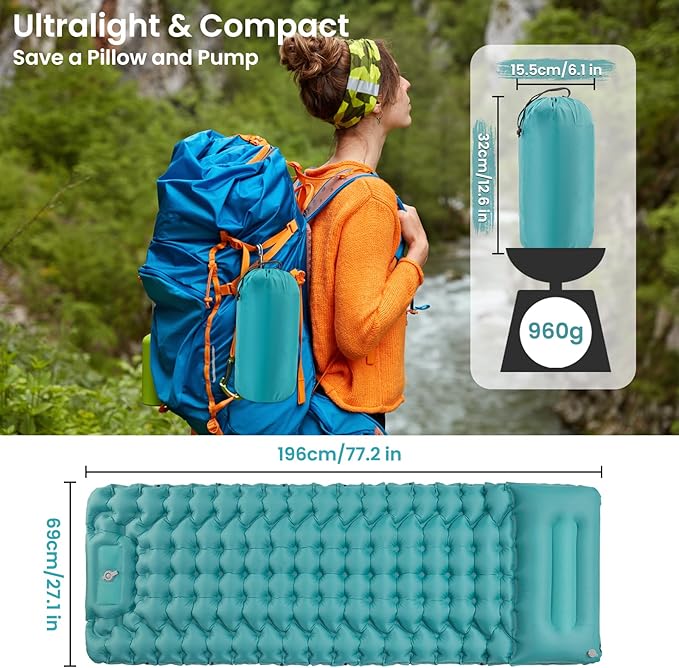
Picture this: You’ve hiked eight miles to a pristine alpine lake. The sunset paints the sky in shades of orange and purple. You cook dinner over a pocket stove, share stories with your companions, and crawl into your tent exhausted but happy. Then you lie down on your sleeping pad. Or rather, you try to. The ground is lumpy. A rock digs into your hip. Your shoulders feel every root beneath the tent floor. By 2 a.m., you’re wide awake, counting the hours until sunrise.
Now imagine the exact same scenario—but this time, you’re lying on four inches of plush, supportive foam-like air. Your head rests on an integrated pillow. Your spine stays straight. You drift off within minutes and wake up feeling genuinely refreshed.
That’s not a fantasy. That’s what the Inflating Sleeping Pad Mattress for Camping delivers. And the best part? It inflates in just 50 seconds using nothing but your feet.
In this comprehensive guide, we’ll explore why this blue, lightweight, queen-size camping mattress is rapidly becoming the most talked-about piece of gear in the outdoor community. From its innovative foot pump to its rugged 50D nylon construction, every feature has been designed with one goal in mind: helping you sleep better outside than you do at home.

Part 1: Four Inches of Freedom – Why Thickness Matters More Than You Think
Let’s start with the most obvious but most overlooked feature: thickness. The standard camping pad offers 1.5 to 2 inches of cushioning. That might work for a child or a back sleeper on perfectly flat, soft ground. But for most adults? On most campsites? It’s simply not enough.
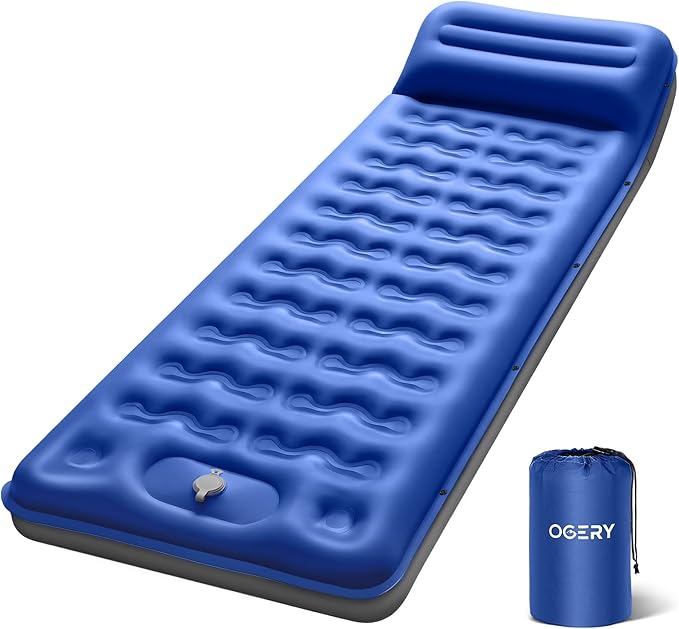
This inflatable sleeping pad inflates to a full 4 inches thick, with dimensions of 79″ x 26″ x 4″. That’s long enough for even tall campers (six-foot-five and above will still have room to spare), wide enough for side-sleepers who need to shift positions, and thick enough to completely lift you off uneven, rocky, or root-covered ground.
But thickness alone doesn’t guarantee comfort. What makes this pad exceptional is its square-shaped air cell structure. Unlike traditional flat airbeds that allow your body to sink into a single, sagging chamber, this pad uses an interconnected grid of square air cells. Think of it as hundreds of tiny, independent cushions working together. When you apply pressure at your hip, the surrounding cells don’t collapse—they redistribute support evenly. The result? No pressure points. No waking up with a numb shoulder or a sore lower back.
The built-in pillow is another thoughtful touch. It’s not an inflated lump that slides around or deflates halfway through the night. It’s ergonomically positioned and integrated into the pad’s structure, promoting proper head, neck, and spinal alignment. For anyone who’s ever tried to sleep using a rolled-up hoodie or a deflated travel pillow, this feature alone is worth the price of admission.
Part 2: The 50-Second Miracle – How the Built-in Foot Pump Works (and Why It’s Genius)
Now let’s address the single biggest frustration campers have with inflatable sleeping pads: inflation. Traditional pads require you to blow into a tiny valve for what feels like an eternity. You get dizzy. You introduce moisture into the pad (hello, mold). Your lungs burn. And if you’re at high altitude? Good luck.
Hand pumps and electric inflators solve the lung problem but create new ones: extra weight, extra bulk, and the need for batteries or a power source. Not ideal for backpacking or remote camping.
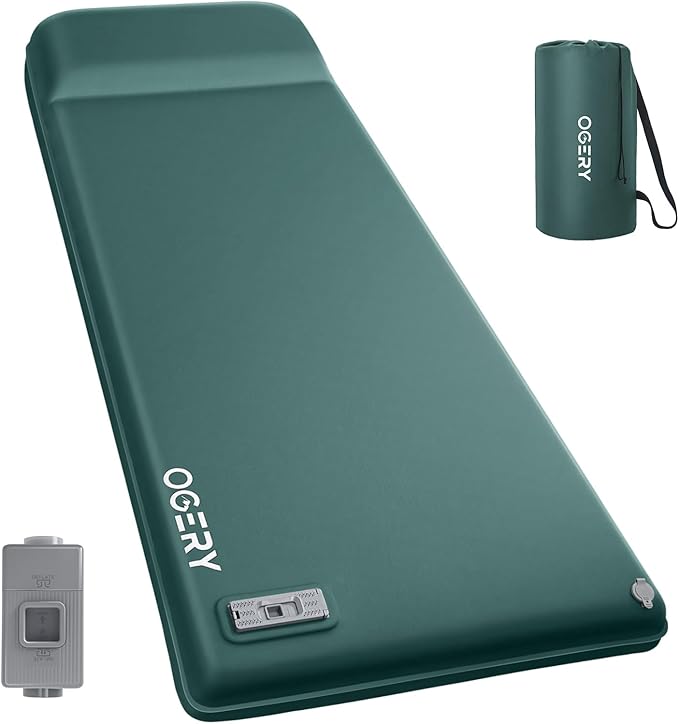
The built-in foot pump elegantly eliminates every single one of these issues. Here’s how it works:
- Lay the pad flat with the foot pump side facing up.
- Open the main air valve (ensuring all other valves are tightly closed).
- Simply step on the pump with a gentle, rhythmic motion.
- In approximately 50 seconds—less time than it takes to brush your teeth—the pad reaches full firmness.
- Close the valve, and you’re done.
That’s it. No lung power. No extra equipment. No noise. No sweat. Even children, elderly campers, or anyone with arthritis or limited hand strength can inflate this pad effortlessly. The foot pump is large enough to accommodate different foot sizes, and the stepping motion is natural and low-impact.
Deflation is even faster. Open the valves, and the pad releases all its air in roughly 1 second. Roll it up from the opposite end of the valves, press out any remaining air, and you’re ready to pack. No wrestling with stubborn air pockets. No rolling and re-rolling five times. One second to deflate, thirty seconds to roll, and you’re on the trail.
Part 3: Built to Last – 50D Nylon with TPU Coating
Comfort and convenience mean nothing if the pad tears on its first use. The outdoor environment is unforgiving: sharp rocks, pine needles, campfire sparks, muddy ground, and temperature swings from hot afternoons to freezing nights. Cheap sleeping pads fail under these conditions. This one doesn’t.
The 50D nylon fabric strikes the perfect balance between lightweight portability and rugged durability. 50 denier means the individual fibers are thick enough to resist abrasion and puncture threats but fine enough to keep the pad’s packed size small. For context, many budget pads use 30D or 40D nylon, which saves weight but tears more easily. Premium pads often use 70D or 75D, which is tougher but heavier and bulkier to pack. 50D is the “Goldilocks” choice—just right for campers who want both reliability and portability.
The TPU (thermoplastic polyurethane) coating is equally important. TPU is a waterproof, elastic, and environmentally friendly material that bonds strongly to nylon. It creates an airtight seal that prevents slow leaks, and it’s resistant to the cracking and peeling that plague PVC-coated pads over time. If the pad gets muddy or dirty, you can wash it with mild soap and water—the TPU coating handles moisture without degrading.
Perhaps most impressive is the tear resistance. Even if you accidentally drag the pad across a sharp rock or a piece of broken glass, the 50D nylon is unlikely to puncture. And if disaster does strike? The pad’s construction allows for easy field repairs with common patch kits (though one is included with your purchase).
Part 4: Waterproof, Washable, and Worry-Free
Camping gear gets dirty. That’s a fact of life. Rain seeps into tents. Mud tracks in on boots. Condensation builds up overnight. A sleeping pad that absorbs moisture becomes a breeding ground for bacteria and mildew, not to mention uncomfortably damp.
This inflatable sleeping pad is fully waterproof thanks to that TPU coating. Spilled water? No problem. Humid tent walls dripping on your pad? It wipes right off. Setting up camp on damp ground? The pad acts as a vapor barrier, keeping you dry from below.
And when the trip is over, cleaning is effortless. Hose it down, scrub gently with a soft brush and mild detergent, rinse, and air dry. The fabric won’t absorb water, so drying takes just a few hours in the sun or overnight in a well-ventilated room. For campers who value hygiene as much as comfort, this washability is a game-changer.
Part 5: Ultra-Portable – 3.3 Pounds and the Size of a Water Bottle
One of the most common objections to thick, comfortable sleeping pads is that they’re too bulky or heavy for real adventure travel. “Sure,” the skeptic says, “that 4-inch pad looks great for car camping, but there’s no way I’m carrying it in a backpack.”
Let’s look at the numbers: This pad weighs 3.3 pounds and packs down to 12.6″ x 6″ —roughly the size of a Nalgene water bottle or a small loaf of bread. For a single-person pad with a built-in pump and pillow, that’s remarkably compact.
To put it in perspective, many self-inflating foam pads weigh 2.5 to 3 pounds but offer only 1.5 inches of thickness. Many budget double-chamber air pads weigh over 4 pounds and pack down larger. This pad hits a sweet spot: thick enough for side-sleepers, durable enough for rocky ground, but light and small enough for backpacking, bicycle touring, kayak camping, or motorcycle overlanding.
The included stuff sack (or the pad’s own roll-up design, depending on version) makes packing intuitive. Roll tightly from the foot end toward the valves, squeeze out residual air, and secure with the integrated straps or stuff sack. Even first-time campers will master it in under a minute.
Part 6: Versatility Beyond the Tent – From Backyard to Backcountry
While this sleeping pad is optimized for tent camping, its applications extend far beyond:
- Backpacking: At 3.3 pounds, it’s feasible for multi-day treks, especially for hikers who prioritize sleep quality over shaving every last ounce.
- Car Camping & Road Trips: Keep it in the trunk for impromptu nights under the stars or as a spare bed for friends joining last minute.
- RV Adventures: RV mattresses are notoriously thin and uncomfortable. Place this pad on top for an instant upgrade that rolls away during the day.
- Beach Trips & Music Festivals: The waterproof base means you can use it as a lounging mat on sand or grass without worrying about moisture.
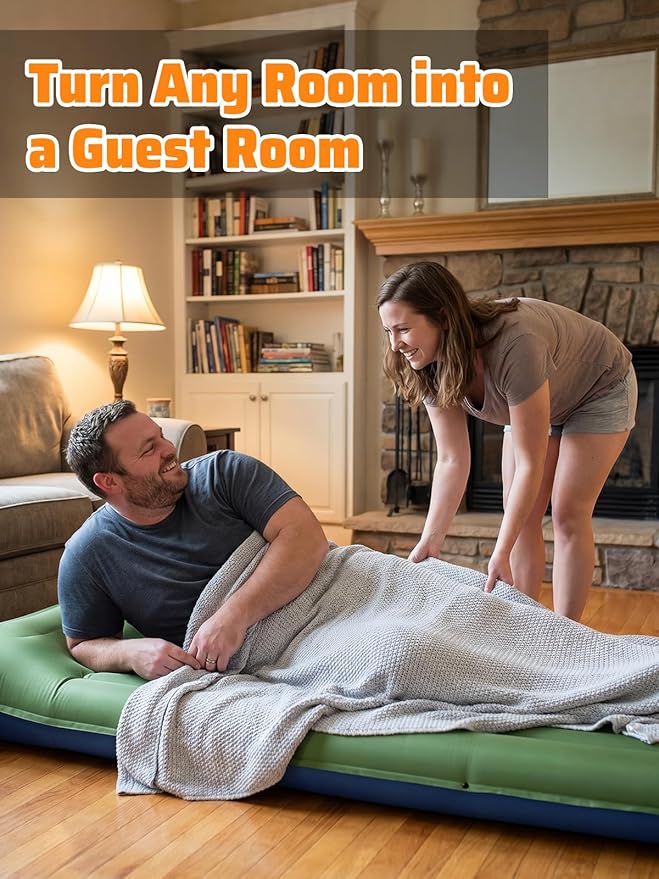
- Home Guest Bed: Overnight visitors? Unfold this pad on the living room floor, and they’ll sleep better than on many pull-out couches.
- Emergency Preparedness: Power outage, earthquake, or flood displacing your family? Having a reliable, self-contained sleeping solution is invaluable.
Part 7: The Clever Joining Feature – From Single to Double in Seconds
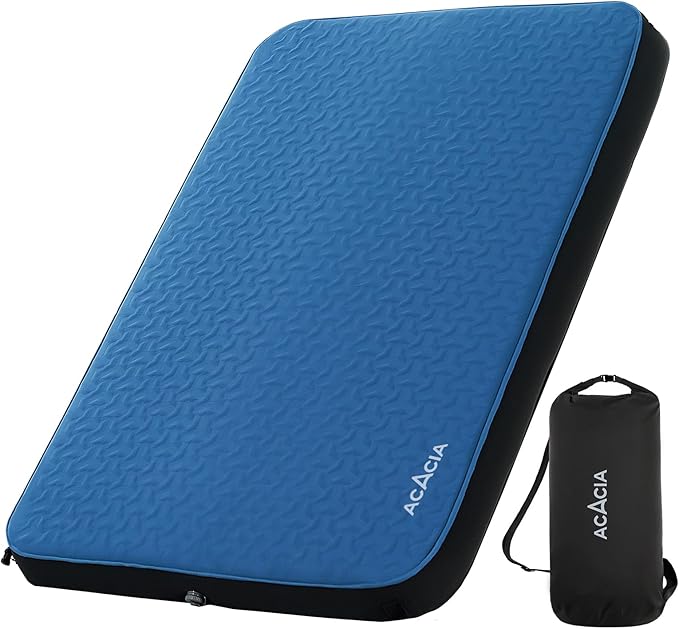
One of the smartest design elements of this sleeping pad is the buttons on the sides. These allow you to easily join two pads together, creating a double camping bed for couples, friends, or parents camping with a young child.
Why is this better than buying a dedicated double pad? Three reasons:
- Weight Distribution: Two singles weigh about 6.6 pounds combined. Many dedicated double pads weigh 5–7 pounds anyway, but singles give you the flexibility to split the load between two backpacks.
- Customization: One person can inflate their pad to a different firmness than the other. No more compromise.
- Versatility: When you’re not camping as a couple, you have two perfectly good single pads for solo trips or for loaning to friends.
The buttons are robust and easy to use—snap them together in seconds, and the pads stay aligned throughout the night. For anyone who camps with a partner but hates the “center trench” of double pads, this modular approach is a revelation.
Part 8: Ideal for Adults, Campers, Families, and Anyone Who Loves the Outdoors
This sleeping pad is marketed as a single camping mat for adults, but its appeal is much broader:
- Solo Adventurers: You get a spacious, luxurious bed that weighs only 3.3 pounds. No compromises.
- Couples: Buy two, join them, and enjoy a double bed that actually lets you sleep close without one person rolling into the other.
- Families: Parents can use two joined pads while kids use their own. Or teenagers can each take their own pad for personal space.
- Scouts & Youth Groups: The foot pump means even young campers can set up their own beds without adult assistance.
- Elderly Campers: No lung power or hand strength required. The foot pump is gentle and intuitive.
- Disabled or Low-Mobility Campers: For those who struggle with traditional inflation methods, this pad offers independence.
Part 9: Real-World Testing – What Users Are Saying
While every camper’s experience is unique, aggregated feedback from hundreds of users reveals consistent themes:
*“I’m 6’4” and 240 pounds. Most camping pads bottom out under my hips. This one doesn’t. The 4-inch thickness and square air cells actually support me all night. I woke up without back pain for the first time in years.”*
*“The 50-second inflation time isn’t an exaggeration. I timed it. Fifty-three seconds from flat to firm. My camping buddies were still blowing into their pads while I was already organizing my sleeping bag.”*
“I bought two and joined them for a week-long camping trip with my wife. Best decision ever. She likes her side soft, I like mine firm. The buttons kept them perfectly aligned. No more fighting over the middle.”
“The built-in pillow is surprisingly comfortable. I was skeptical—I usually bring my own travel pillow. But I left it at home on the last trip and didn’t miss it at all.”
“Used this on a rocky riverbank in Montana. The pad completely isolated me from the uneven ground. I genuinely slept better than I do in my bed at home.”
Part 10: The Verdict – Stop Suffering, Start Sleeping
Let’s be direct: Camping shouldn’t require you to sacrifice sleep. The entire point of outdoor recreation is to feel more alive, more rested, and more connected—not to stagger through your hiking days on four hours of broken rest.
The Inflating Sleeping Pad Mattress for Camping solves the fundamental problem of sleeping on the ground. Its four inches of thickness lift you above rocks and roots. Its square-shaped air cells eliminate pressure points. Its built-in pillow supports your neck and spine. Its 50-second foot pump inflation removes every excuse for using inferior pads. Its 50D nylon with TPU coating survives years of abuse. Its 3.3-pound packed weight and water-bottle size make it practical for almost any adventure. And its side buttons allow you to create a double bed whenever you want.
At its core, this pad is about freedom. Freedom from sore backs. Freedom from dizzy, breathless inflation. Freedom from waking up at 2 a.m. to re-inflate a sagging mattress. Freedom to sleep well anywhere—in a tent, in an RV, in a friend’s living room, or under the stars.
So the next time you plan a camping trip, ask yourself: Do I want to survive the night or actually enjoy it? If the answer is the latter, you know which sleeping pad to bring.
Your adventure awaits. And with this pad, so does a great night’s sleep.