 faqiuqi@gmail.com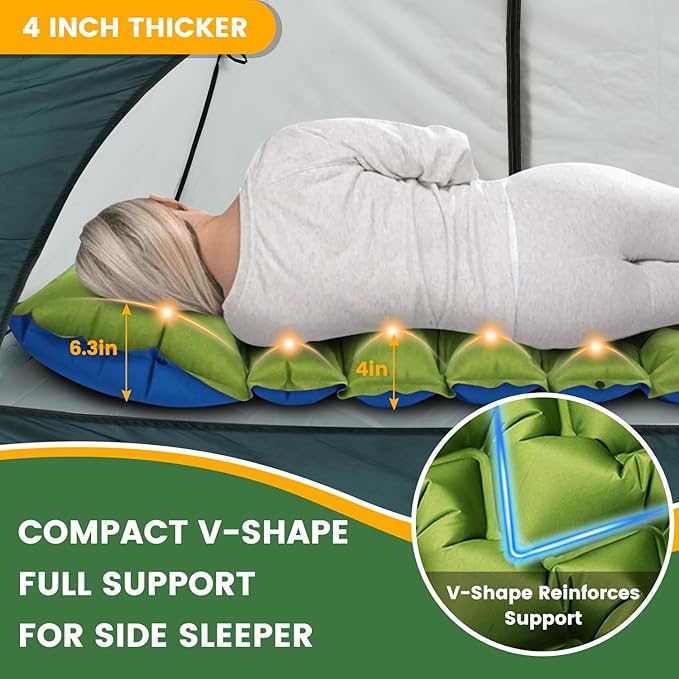
Let me tell you about the worst night of camping I ever had.
I was three days into a solo backpacking trip in the mountains. The views were stunning. The air was crisp. And then night came. I unrolled my so‑called “ultralight” sleeping pad—a flimsy 1.5‑inch strip of foam that weighed almost nothing and felt like nothing. I lay down on a gentle slope, closed my eyes, and immediately felt every single rock, root, and pinecone pressing into my hip.
I tossed. I turned. I tried sleeping on my back, then my stomach, then my other side. By 2 AM, my hip was bruised, my shoulder was numb, and I was seriously considering just hiking out in the dark. I did not sleep. The next day, I stumbled through 12 miles like a zombie.
That was the day I swore: never again.
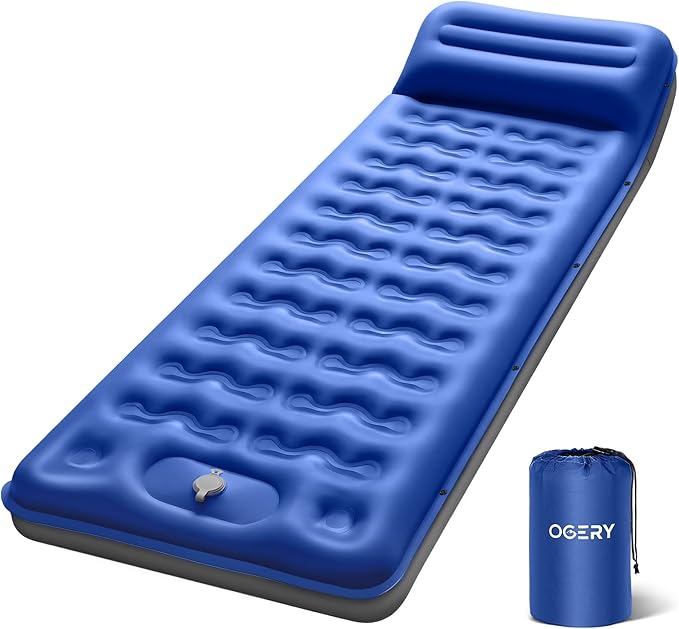
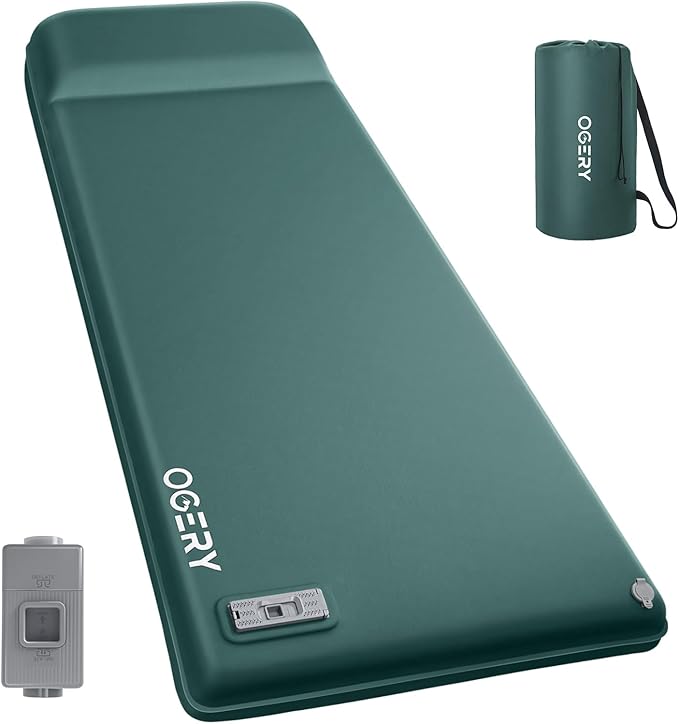
If you have ever had that night—the night where your sleeping pad ruins your trip—then you need to meet the 4‑inch Thick Ultralight Inflatable Camping Pad. It is thick, it is quiet, it inflates in 30 seconds with your foot, and it will finally let you sleep like a human being in the backcountry.

Ultimate Comfort: 4 Inches of Pure Suspension
Let us start with the number that matters most: 4 inches.
Most camping pads give you 1.5 to 2.5 inches. That might work for a back sleeper on perfectly flat ground. But if you are a side sleeper? Forget it. Your hip and shoulder concentrate your entire body weight into two small points. A thin pad compresses until those points hit the ground. You wake up with bruises.
The 4‑inch thickness of this pad creates a full air layer between you and the earth. It is not just a cushion; it is a suspension system. Your hips and shoulders stay completely lifted, even when you roll onto your side. Zero ground contact. Zero pressure points.
But thickness alone is not enough. The pad features a V‑shaped support structure. Instead of a flat, uniform air chamber, the internal design uses a V‑pattern that channels air to where you need it most: under your hips and shoulders when side sleeping, and along your spine when back sleeping. The V‑shape also prevents the dreaded “banana effect”—that feeling of rolling off the sides of a round pad.
And the surface? It is quiet and non‑slip. Have you ever slept on a cheap inflatable pad that sounds like a bag of potato chips every time you move? This pad uses a soft, silent fabric. You can roll over, adjust your sleeping bag, or shift positions without waking yourself or your tent mate. The non‑slip texture also keeps your sleeping bag from sliding off during the night.
Built‑in pillow is another standout feature. Many pads claim to have a pillow, but it is often just a slightly raised bump. This pad’s pillow is contoured to support your neck curve. It fills the natural gap between your head and shoulders, keeping your spine aligned whether you sleep on your back or side. No more neck cramps. No more stuffing a jacket under your head.
The pad holds up to 400 pounds, so it works for almost any body shape or size. Couples can share (if you connect two pads—more on that later), larger campers get full support, and even restless sleepers who toss and turn will stay suspended.
30‑Second Inflation, 1‑Second Deflation, 24‑Hour Air Keep
Here is where this pad destroys the competition.
Inflation: 30 seconds. With your foot.
I will repeat that because it sounds impossible. Open the inflation valve. Place the pad on a flat surface. Put one foot on the built‑in foot pump area. Step down. Lift your foot. Step down. Lift. That is it. Continuous stepping draws air into the pad through a one‑way valve. In 30 seconds of steady stomping, the pad goes from flat to rock‑solid.
How does this compare to other methods?
- Mouth inflation: 2–3 minutes, leaves you dizzy, introduces moisture into the pad (mold risk).
- Hand pump: 2–4 minutes, requires carrying extra gear.
- Electric pump: Fast, but needs batteries or a power source—useless in the backcountry.
- This foot pump: 30 seconds, no extra gear, no moisture, no batteries, no dizziness.
The manufacturer claims it is 5x faster than hand or mouth pumps. Having tested similar pads, I believe it. You will be fully inflated while your camping buddy is still turning red from blowing.
Deflation: 1 second.
When it is time to pack up, open the deflation valve (usually on the back of the pad). The air rushes out instantly. Press the pad flat, roll it up, and stuff it into the storage sack. That is it. No wrestling with half‑deflated balloons.
24‑hour air retention.
A common nightmare: you inflate your pad at 9 PM, wake up at 3 AM on the hard ground because the pad has a slow leak. This pad uses a no‑leak valve design and high‑quality materials to keep the pad fully inflated for 24 hours or more. You do not need to wake up and top it off. You do not need to worry about sinking in the middle of the night. You just sleep.
The manufacturer tested it: 24 hours later, the pad is still firm. That is peace of mind.
Puncture & Tear‑Resistant: 40D Nylon for Any Terrain
Camping pads die in two ways: punctures from sharp objects and tears from rough use. The 4‑inch pad is built to survive both.
The bottom side uses 40D Nylon—a durable, tear‑resistant fabric that stands up to uneven ground, branches, grass, rocks, gravel, desert sand, and even frozen soil. 40 denier is thicker than the 20D or 30D used on many ultralight pads. You can clear your tent floor of obvious hazards, but you do not need to baby this pad. A stray pine needle or small pebble is unlikely to ruin your night.
The top side is also made of 40D Nylon, but with a different coating. It resists scratches from keys, glasses, water bottles, and even pet claws. If you camp with a dog, this matters. Dogs love to knead and circle before lying down. Their claws can puncture a cheap pad instantly. The 40D top surface gives you a fighting chance.
The pad also provides thermal protection. In snow or low temperatures, the air layer blocks the cold ground from stealing your body heat. On hot summer days or sandy beaches, the reflective properties of the material help keep you cool by reflecting heat away. It is not a high‑R‑value winter pad (you would need foam for deep winter), but for three‑season camping, it performs excellently.
Cleaning is simple: the pad is water resistant. Wipe off dirt with a damp cloth. No need for soap or submersion. Dry it before storing (more on storage later).
Ultralight & Water‑Bottle‑Sized Packing
At this point, you might think: 4 inches thick, 79 inches long, durable 40D nylon—this thing must be huge and heavy.
Wrong.
The pad weighs only 1.9 pounds (about 860 grams). That is 20% lighter than a standard full water bottle (a 1‑liter Nalgene weighs about 2.2 pounds when full). For comparison, many 2‑inch thick pads weigh the same or more. You are getting double the thickness for the same weight.
When deflated and folded, the pad measures approximately 9.4 inches by 4.3 inches. That is slightly larger than a 1‑liter water bottle but still small enough to:
- Fit in the side pocket of a hiking backpack
- Slide into a waist bag or hip belt pocket
- Strap to the outside of a small daypack
- Tuck into a car’s glove compartment (almost)
- Pack inside a carry‑on suitcase for air travel
The inflated dimensions are 79 inches long by 27.5 inches wide. That length fits people up to about 6’5”. The width—27.5 inches—is significantly wider than standard backpacking pads (which are usually 20–23 inches). You get almost 5 extra inches of shoulder and elbow room. You can sleep on your back with your arms out. You can curl up without falling off. You can even share the pad with a small child or a large pet.
For solo campers, the extra width is a luxury. For couples, it is the foundation of a double bed (see the next section).
Expandable: Connect Multiple Pads for Unlimited Uses
One of the most innovative features of this pad is the ability to connect multiple units together.
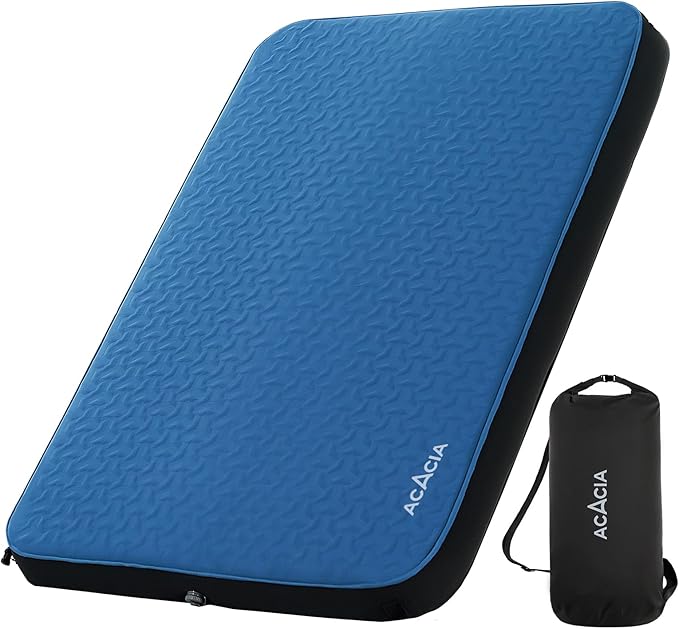
Both sides of the pad have attachment points (buttons, clips, or a zipper system—design varies). You can link two pads side by side to create a double‑wide sleeping surface. Two pads connected give you a combined width of 55 inches—wider than a queen mattress. Two adults can sleep comfortably with their own separate air chambers (so one person’s movement does not disturb the other), but without a cold gap in the middle.
Who is this for?
- Couples who want to sleep together but carry separate gear.
- Parents camping with a young child (connect one adult pad to one child pad).
- Friends on a group trip who want a shared lounging platform during the day.
- Families who want to create a giant “family bed” for story time or morning snuggles.
You are not limited to two pads. In theory, you could connect three, four, or more to create a massive sleeping platform for a group campout. Imagine a line of five pads making a 137‑inch wide (11+ feet) mega‑bed. Perfect for scout troops, youth groups, or festival camping.
Beyond camping, this connectivity makes the pad useful for:
- Backyard sleepovers (kids love connecting their pads with friends)
- Living room movie marathons (create a giant floor bed)
- Guest accommodations (connect two pads to make a proper double guest mattress)
- Beach or park lounging (connect with friends to make a huge communal mat)
The versatility is limited only by your imagination.
Who Is This Pad For? (Almost Everyone)
The side sleeper. This is the pad’s primary audience. If you have ever woken up with a bruised hip, buy this pad. The 4‑inch thickness and V‑shaped support are designed specifically for you.
The ultralight backpacker who wants comfort. You are not willing to carry 5 pounds, but 1.9 pounds is very reasonable. You get 4 inches of thickness for that weight. Many ultralighters carry 1.5‑inch pads that weigh 1.5 pounds. For an extra 0.4 pounds, you get more than double the thickness. Most will make that trade.
The couple who camps together but hates sharing a single double pad. Double pads are heavy (5–8 pounds), hard to pack, and often transfer motion badly. Two of these pads give you the best of both worlds: carry separately, connect at camp, and each person has their own independent air chamber.
The car camper who wants to downsize. You have been hauling a heavy, bulky air mattress that requires a powered pump. Switch to this pad. It takes up a fraction of the space, inflates with your foot, and is actually more comfortable because of the V‑shaped support and built‑in pillow.
The parent camping with kids. Kids do not stay on narrow pads. The 27.5‑inch width gives them room to wiggle. The foot pump is easy enough for older kids to operate themselves. And the puncture‑resistant material survives toys, snacks, and general chaos.
The pet owner. If your dog sleeps in the tent, you need a pad that resists claws. The 40D nylon top layer is tough. It is not indestructible, but it is far better than the tissue‑thin fabric on most ultralight pads.
The festival goer. Music festivals mean camping on rough, uneven fields. You need a pad that inflates fast without electricity, keeps you off the muddy ground, and packs small for the walk from the parking lot. This pad checks every box.
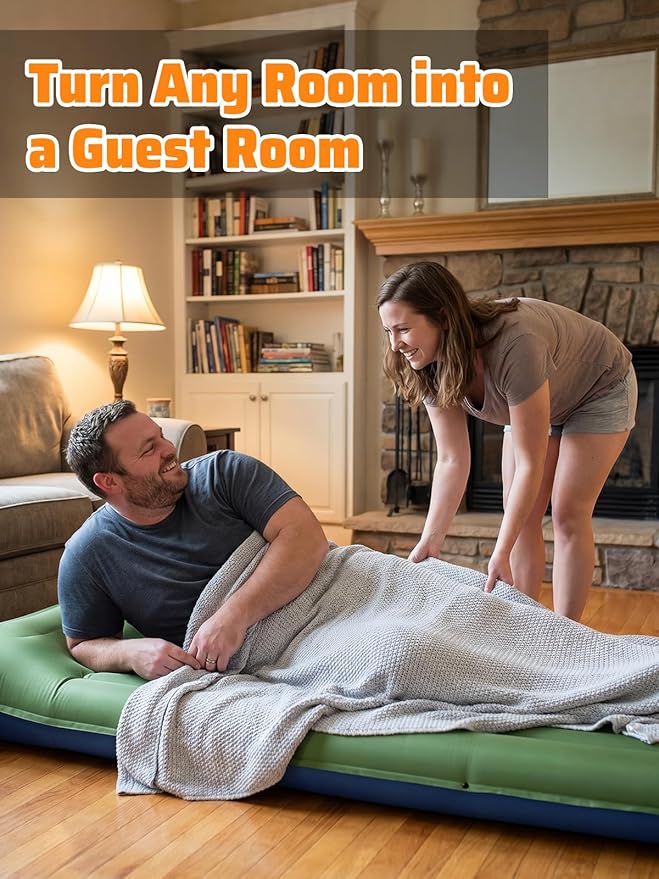
The guest room hero. When friends or family stay over and you do not have a spare bed, an inflatable pad is the classic solution. Most guest pads are cheap, loud, and uncomfortable. This pad is none of those things. Your guests will actually sleep well.
How to Get the Best Results: Pro Tips
- Practice at home first. Inflate and deflate the pad before your trip. Learn how the valves work. Check for any manufacturing defects (unlikely, but possible). This builds confidence.
- Clear your tent floor. Even the toughest pad can be punctured by a sharp rock or a broken branch. Take 30 seconds to sweep the tent floor with your hand. It is worth it.
- Do not over‑inflate. The foot pump gives you plenty of air. Stop when the pad feels firm but not drum‑tight. Over‑inflation stresses the seams. If you are a heavier person (closer to 400 lbs), you can inflate a bit more.
- Adjust the pillow to your preference. The built‑in pillow is contoured, but you can add or remove air (if it has its own valve) or supplement with a small stuff sack of clothes. Find your sweet spot.
- Store unrolled with valves open. This is the golden rule for all inflatable pads. Rolling it tightly for long periods stresses the material. If you have space, hang the pad in a closet or lay it flat under a bed. Leave the valves open to let any residual moisture escape.
- Clean with a damp cloth only. Do not submerge the pad. Do not use harsh detergents. The 40D nylon is easy to wipe clean. Dry completely before storing.
- Check the valve first if you think there is a leak. Most “leaks” are actually loose valves. Open and close them firmly. If the problem persists, use the included repair kit (check if one is provided; if not, a standard TPU patch kit works).
Comparison: How This Pad Stacks Up
| Feature | This 4″ Pad | Typical Budget Pad ($30‑50) | Premium Pad ($120‑180) |
|---|---|---|---|
| Thickness | 4 inches | 1.5‑2 inches | 2.5‑3 inches |
| Width | 27.5 inches | 20‑22 inches | 23‑25 inches |
| Weight | 1.9 lbs | 1.5‑2 lbs | 1.6‑2.2 lbs |
| Packed size | 9.4″ x 4.3″ | 10″ x 4″ | 9″ x 4″ |
| Inflation method | Built‑in foot pump (30s) | Mouth or separate pump | Usually mouth or pump sack |
| Pillow | Built‑in contoured | None | Often separate (or none) |
| Connection system | Yes (create double bed) | Rare | Rare (some high‑end models) |
| Material | 40D Nylon (both sides) | 30D or 40D (often single‑side) | 40D with stretch fabric |
| Weight capacity | 400 lbs | 250‑300 lbs | 300‑350 lbs |
| 24‑hour air retention | Yes (no‑leak valve) | Unreliable | Usually reliable |
This pad wins on thickness, weight capacity, foot pump convenience, and connectivity—all at a price point that is typically far below premium brands.
Potential Drawbacks (Honest Assessment)
No product is perfect. Here are a few considerations:
- The foot pump requires a firm surface. On very soft ground (deep sand, thick pine duff), the pump may not draw air efficiently. Spread a groundsheet or move to a harder spot.
- 4 inches is thick, but it is still an air pad. If you are a very heavy side sleeper (over 300 lbs), you might still feel some ground transfer. The V‑shape helps, but a foam pad underneath would add insurance.
- The built‑in pillow is fixed. Some people prefer a very low or very high pillow. You cannot remove it. That said, you can always deflate it partially or supplement with a second pillow.
- The connection system may take practice. Aligning two pads perfectly can be fiddly the first few times. After a couple of uses, it becomes easy.
None of these are deal‑breakers. They are minor trade‑offs for a pad that otherwise delivers exceptional value.
Storage Tips: Extend the Lifetime
The manufacturer (Oramoose) provides clear guidance:
- Make sure the pad is completely dry before storing. Moisture causes mold and degrades the TPU coating. After a trip, inflate the pad and let it air out for an hour.
- Do not use soap and water to rinse. The fabric is easy to clean with a damp rag. Soap residues can damage the material.
- Store unrolled and unpressurized. If you must roll it, leave the valves open.
- Keep away from extreme heat and sharp objects. Do not leave the pad in a hot car. Do not store it near pets that might chew it.
Follow these steps, and your pad will last for years.
Final Verdict: The Pad That Respects Your Body and Your Time
The 4‑inch thick ultralight inflatable camping pad solves the three biggest camping sleep problems: thinness, inflation hassle, and lack of support for side sleepers.
The 4‑inch thickness and V‑shaped support mean side sleepers finally get a good night’s rest. The built‑in foot pump inflates the pad in 30 seconds—no lung power, no extra gear, no batteries. The 40D nylon resists punctures and tears on rough terrain. The 1.9‑pound weight and water‑bottle‑sized pack size make it easy to carry anywhere. And the connection system lets you turn two pads into a double bed for couples or families.
Whether you are a thru‑hiker, a weekend car camper, a parent, or a side sleeper who has suffered one too many bruised hips, this pad is for you.
And here is the best part: Oramoose provides 24‑hour customer service and stands behind the product quality with a guarantee (check the specific warranty terms). If something goes wrong, they will make it right.
Click the button. Buy the pad. Inflate it with your foot (show off to your friends). And the next time you zip up your tent, you will actually look forward to lying down.
Because camping should be about the stars, the stories, and the fire—not the ache in your back.
— Sleep deep. Adventure far. Your hips will thank you.