 faqiuqi@gmail.com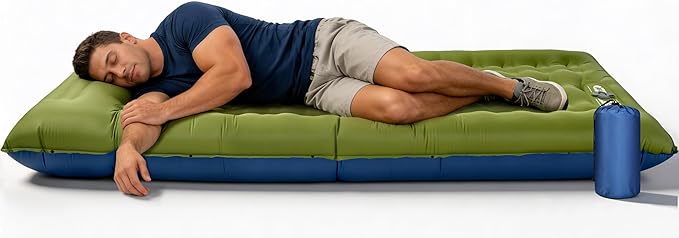
There is a specific type of misery unique to the outdoor world. It doesn’t come from bears, bad weather, or blisters. It comes at 2:00 AM, when you are lying on your side, and your hip bone has found the exact location of a rock buried six inches beneath your tent floor.
We have all been there. You buy a cheap sleeping pad. You roll it out. You feel optimistic. Then, by morning, your spine is curved like a question mark, and you swear you will never camp again.
But what if the solution was as simple as six-point-three inches of air? What if you could bring your bed at home into the backcountry without needing a pickup truck to haul it?
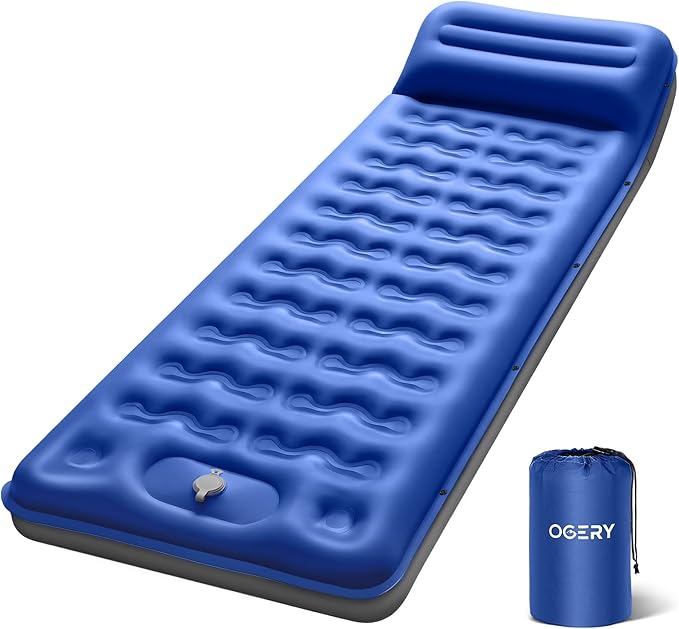
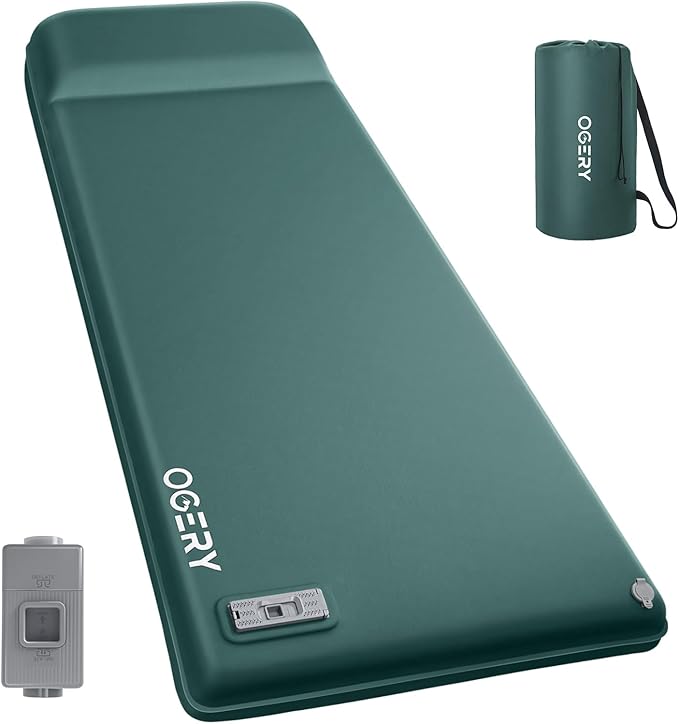
Enter the 6.3 Inch Thick Air Mattress for Backpacking and Camping. This isn’t your father’s flimsy pool float. This is a heavy-duty, double-chambered, 800-lb support system disguised as a lightweight sleeping pad. It is the bridge between the comfort of your master bedroom and the wild freedom of the outdoors.
Part 1: Breaking the Myth – Thick Does Not Mean Heavy

Let’s address the elephant in the tent immediately. When campers hear “6.3 inches thick,” they immediately imagine a massive, rolled-up monster that weighs ten pounds and requires a mule to carry.
Stop right there.
This mat weighs only 2.4 lbs. That’s lighter than a standard laptop. It packs down small enough to fit into the included carry bag, sliding easily into your backpack, duffel bag, or car trunk.
How is this possible? Engineering. The mat relies on air—the lightest structural material in the universe. The weight comes from the reinforced dual air chamber structure, not heavy foam. You get the thickness of a luxury mattress with the portability of a backpacking staple. Whether you are hiking ten miles to a remote lake or driving to a crowded music festival, this mat travels with you, not against you.
Part 2: The 800-Lb Gorilla – Heavy-Duty Support for Everyone
One of the most frustrating lies in the camping industry is the weight limit. Many air pads claim to support “heavy” campers, but the first time a 200-pound person rolls over, the mat bottoms out. You feel the ground. You hear the hiss of air escaping. You sink.
We have solved this with a reinforced dual air chamber structure.
Think of it like a suspension bridge. Instead of one large, unstable air bubble (which allows pressure to shift unpredictably), this mat uses two interconnected chambers. When you lie down, the pressure distributes laterally and vertically. The result? A verified static load capacity of 800 lbs.
Let that sink in. 800 lbs.
- For larger campers: You will no longer feel the ground. Period.
- For couples (using two pads): You can sleep side by side without the “taco effect” where both people roll into the center.
- For active sleepers: Toss, turn, flail, starfish. The mat remains stable.
You can sleep confidently in a tent, at a crowded campsite, or during family trips without that nagging anxiety of “bottoming out” at 3 AM.
Part 3: 6.3 Inches of Elevation – Why Height Matters
Many backpackers argue that a one-inch foam pad is “enough.” But “enough” is not “comfortable.” When you sleep on the ground, even a thin layer of foam transfers cold and pressure points.
6.3 inches is a game-changer.
When fully inflated, this mattress lifts your body high above the tent floor. Small pebbles? Ignored. Uneven roots? Neutralized. Frozen ground? You are floating in an air pocket, insulated from the chill.
This elevation is critical for three types of campers:
- Side sleepers: Your hips and shoulders need depth to sink without hitting the hard floor.
- Cold sleepers: Air is an insulator. Six inches of trapped air creates a thermal barrier.
- Recovery-focused adventurers: If you hiked 15 miles, your muscles need true rest, not a yoga mat.
Whether you are at a music festival sleeping on trampled grass, car camping at a state park, or on an extended overlanding trip, this 6.3-inch thickness delivers hotel-grade sleep.
Part 4: The Built-In Foot Pump – Genius or Gimmick?
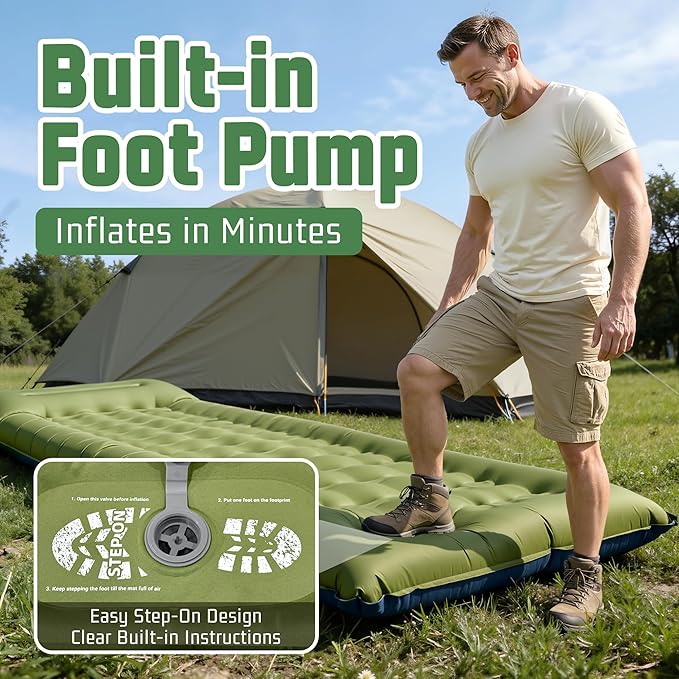
Let’s be honest. Nobody likes inflating sleeping pads. Hand pumps break. Battery pumps die. Mouth inflation is disgusting (hello, mold and moisture) and leaves you lightheaded.
The industry standard has been to either suffer or spend $50 on a separate pump. We refuse.
This mat features an integrated foot pump with a printed step guide directly on the fabric. Yes, printed right there. You cannot lose the instructions.
How it works:
- Unroll the pad.
- Locate the footprint graphic.
- Place your foot on the designated area and step down.
- Release. Step again.
No electricity. No batteries. No lungs. Just the weight of your body moving air into the chambers. Within minutes, you have a fully inflated 6.3-inch mattress using zero additional gear.
We have tested this against traditional pumps. The foot pump is quieter, more reliable, and actually kind of fun. Kids love helping. Drunk festival-goers can manage it. It is fail-proof.
Part 5: The Midnight Leak Anxiety – Solved
The single greatest fear of any air mattress user is waking up on the ground. You know the feeling: you inflate the pad, lie down, fall asleep, and wake up four hours later with your back against the cold dirt because the air slowly seeped out.
This mat features an engineered double-layer air valve system with a secure sealing structure.
- Layer 1 (The Quick Release): Used for fast deflation.
- Layer 2 (The Check Valve): Prevents backflow of air.
Because of this design, the pad maintains consistent firmness throughout the night. We have run overnight inflation tests in varying temperatures. While some expansion/contraction is normal with temperature drops, this pad significantly reduces air loss compared to standard backpacking valves.
You will minimize—and likely eliminate—the need for those groggy, late-night re-inflating sessions. Sleep through the night. Wake up exactly where you started: on top of a firm, supportive mattress.
Part 6: The “Couples Connection” – Snap Buttons for Two
Camping as a couple often presents a unique problem. You want to be close, but two separate sleeping pads always drift apart. You end up sleeping in the “valley of doom” between the two mats.
Our engineers added a simple, elegant solution: built-in snap buttons.
- Own one pad? Sleep solo, perfectly comfortable.
- Have a partner? Connect two pads side-by-side.
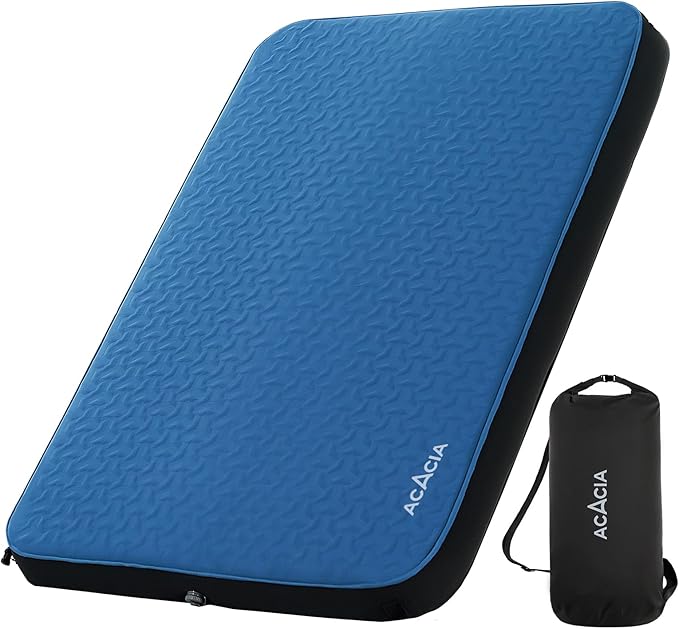
When snapped together, the two mats form a larger, queen-like sleeping surface. No more gap. No more fighting for center. You get the intimacy of sharing a bed with the individual support of separate air chambers (meaning if one person moves, the other doesn’t bounce).
This feature is a massive hit for family camping (connect a parent pad to a child pad) and for festival-goers sharing a large tent.
Part 7: The Quiet Revolution – No More Crinkle
We have a confession. We hate noisy sleeping pads. You know the ones—they sound like you are sleeping on a bag of potato chips. Every time you breathe, the fabric squeaks.
Our mat is constructed with low-noise materials. The specific denier and coating of the fabric have been chosen to reduce rustling sounds. You can roll over, adjust your pillow, or stretch without waking up your tent neighbor.
For couples, this is a marriage saver. For solo campers, it means you hear the loons and the wind, not the plastic symphony under your back.
Part 8: Deflation and Pack-Up – The 30-Second Takedown
The fun is over. Time to go home. This is usually where air mattresses fight back. You open the valve, and the air trickles out slowly while you try to fold a floppy, half-inflated balloon.
Not this time.
Use the quick-release valve. Open it fully, and the 6.3 inches of air evacuates in seconds. Then, simply roll from the foot towards the valve. The dual-layer system allows air to exit but prevents it from re-entering, so you can roll it tight.
Slide it into the included carry bag. Zip it. Done.
The entire deflation and packing process takes under two minutes. No wrestling. No cursing. No need to sit on the mat to force the air out.
Part 9: Durability and Peace of Mind
We know things happen. You might set up camp on a sharp thorn. Your dog might jump on the mat. A spark from the campfire might land on the fabric.
We include a repair sticker with every pad. For minor punctures, you simply clean the area, apply the sticker, and wait. The reinforced dual chamber structure also offers a safety net: if one chamber is compromised, the other chamber often retains enough support to get you through the night.
This is a mattress built for real outdoor abuse, not for pristine hotel rooms.
Part 10: Who Is This Sleeping Pad For?
Let’s break down the perfect customer profile:
- The Car Camper: You have trunk space, but you want a real mattress. You are tired of folding cots and squeaky air beds. This is your upgrade.
- The Backpacker: You need light weight (2.4 lbs) but refuse to sacrifice thickness. You love the no-pump requirement.
- The Music Festival Goer: You need something durable, quick to inflate without electricity, and easy to clean. You also want to sleep late without back pain.
- The Family: You are buying pads for the kids. You want something that supports 800 lbs so you can sit on it without breaking it. The connectable snaps are a game-changer for kids who roll off their mats.
- The Overlander / Truck Camper: You live out of your vehicle for days. You need reliability. You need insulation from the truck bed. You need this mat.
Part 11: Comparing to the Competition
How does this stack up against the big brands?
- VS Self-inflating foam pads: Those max out at 3 inches and cost twice as much. This gives you 6.3 inches for less money, though you do have to step-pump it (which takes 2 minutes).
- VS Cheap air mattresses (Coleman/Intex): Those leak within six months. They have no dual-chamber support. They sleep cold. They are heavy. This is lighter, stronger, and warmer.
- VS Ultralight backpacking pads (Therm-a-Rest): Those cost $200+ for 2.5 inches of thickness. This costs a fraction and offers 6.3 inches. The trade-off is weight, but at 2.4 lbs, it’s competitive with many “lightweight” pads.
Conclusion: Stop Sleeping on the Ground (Literally)
You did not drive out to nature to sleep poorly. You did not buy a tent to wake up with a stiff neck and a bruised hip. You went outside to feel alive, rested, and ready for the trail.
The 6.3 Inch Thick Air Mattress is the tool that makes that possible. It offers the heavy-duty support of an 800-lb capacity, the luxury depth of 6.3 inches, the convenience of a foot pump, and the portability of a 2.4-lb pack.
Whether you are setting up a basecamp for a week-long hunting trip, crashing after a long day on the Appalachian Trail, or just taking the kids for a weekend in the backyard, this pad delivers one simple promise: You will sleep well.
Stop borrowing your friend’s leaky, crinkly, thin mat. Get your own. Step on the pump. Watch it rise. And for the first time in your camping life, sleep flat on your back and feel nothing but air beneath you.
Ready to upgrade your outdoor sleep system? Click here to get your 6.3-Inch Sleeping Pad and feel the difference tonight—wherever you pitch your tent.