 faqiuqi@gmail.com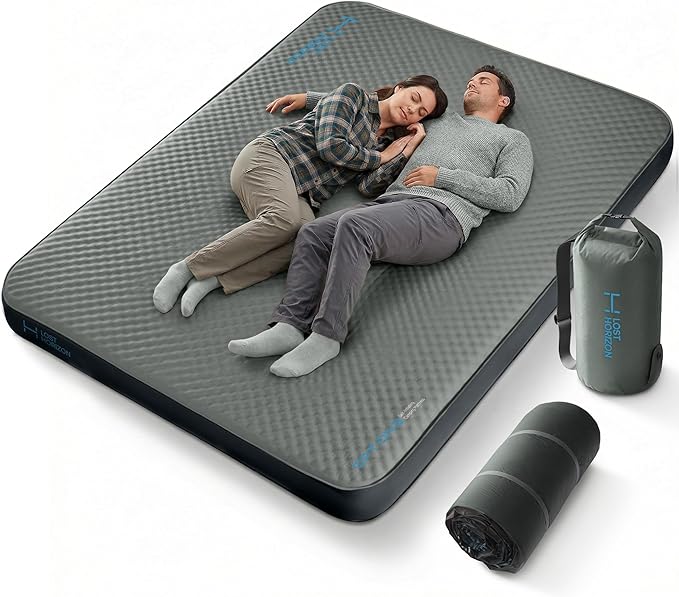
Let’s be honest. Camping is amazing – the fresh air, the starry skies, the crackling campfire. But there’s one part of camping that nobody looks forward to: the sleep. The thin foam pad that compresses to nothing. The air mattress that deflates by 3 AM, leaving your hip on the hard ground. The squeaky, crinkly, plasticky sound every time you roll over.
You wake up stiff, cranky, and wondering why you didn’t just stay home.
For years, campers have been forced to choose between uncomfortable, lightweight backpacking gear and heavy, bulky “glamping” setups. You either slept badly or hauled a monster mattress that took forever to inflate and stored like a dead body.
Lost Horizon decided that was a false choice.
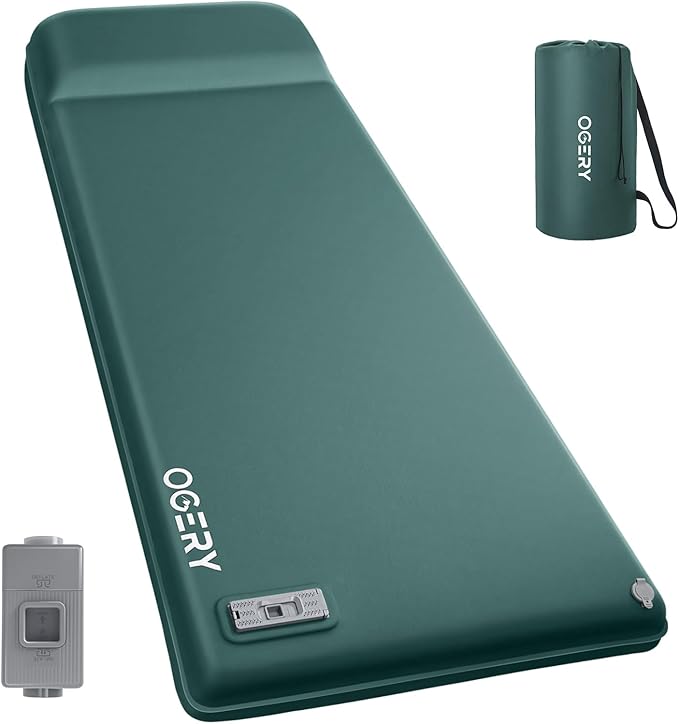
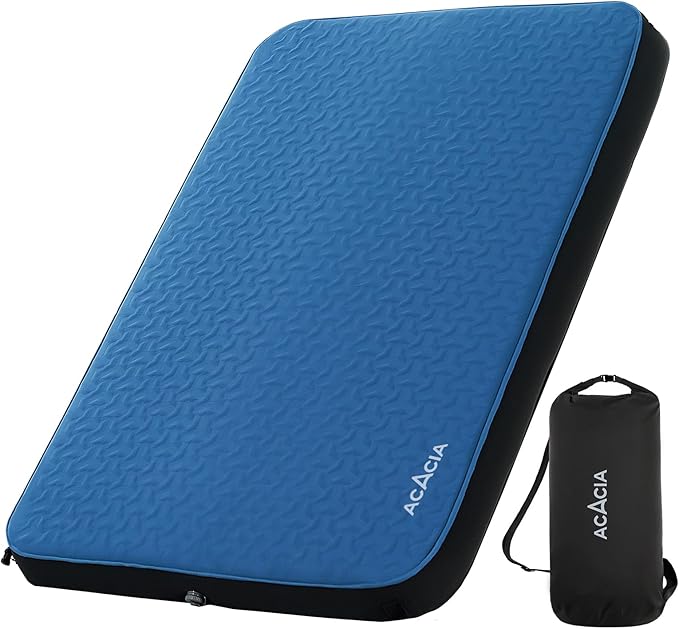
Introducing the Lost Horizon Air & Foam Camping Mattress – a 4.5-inch thick, self-inflating, queen-sized sleeping pad that combines the best of air and foam. It supports up to 440 pounds. It has a mind-boggling R-value of 13 for four-season insulation. It inflates in minutes with the included pump. And it’s so quiet that your partner won’t hear you toss and turn.
Yes, it’s too heavy for backpacking. But for car camping, RV trips, guest beds, and basecamp luxury? This mattress is an absolute game-changer.
Let’s dive into why this 13-pound foam-filled wonder will transform your nights under the stars (or in your living room).
Part 1: 4.5 Inches of Thick, Supportive Comfort

Most camping pads are thin. Really thin. The standard self-inflating pad is 1.5 to 2 inches thick. When you lie down, your hip and shoulder press through the foam and hit the ground. You feel every rock, root, and uneven tent floor.
The Lost Horizon mattress gives you 4.5 inches of vertical loft. That’s nearly half a foot of cushion between you and the cold, hard ground.
Why thickness matters:
- Pressure point relief: When you sleep on a thin pad, your body weight concentrates on your hips, shoulders, and heels. Those points push through the padding, causing pain and restless sleep. At 4.5 inches, the foam and air distribute your weight evenly. You float, rather than sink.
- Side-sleeper friendly: Side sleepers need more padding because their hip and shoulder create sharper pressure points. This mattress is a dream for side sleepers – the 4.5-inch depth allows those bony prominences to sink in without bottoming out.
- 440 lb weight capacity: Most camping pads top out at 250-300 lbs. This mattress holds up to 440 pounds – accommodating couples, larger individuals, or anyone who wants a mattress that won’t collapse under pressure.
The foam inside: The mattress contains 13 pounds of foam filling. That’s not a typo – thirteen pounds of high-quality foam. When you compare that to cheap self-inflating pads that have 2-3 pounds of thin, crumbling foam, the difference is night and day. This foam doesn’t bottom out. It retains its shape year after year. And it provides the base support that the air chamber then fine-tunes.
Who is this for?
- Car campers who drive to their site
- RV owners replacing a terrible built-in mattress
- Families camping with kids (the queen size fits two adults or three small children)
- Hunters or fishermen at basecamp
- Anyone who has ever said, “I love camping but I hate sleeping on the ground”
Who is this NOT for? Backpackers. At 13+ pounds, you’re not carrying this up a mountain. But for every other camping scenario, it’s perfect.
Part 2: Adjustable Softness – The Air + Foam Magic
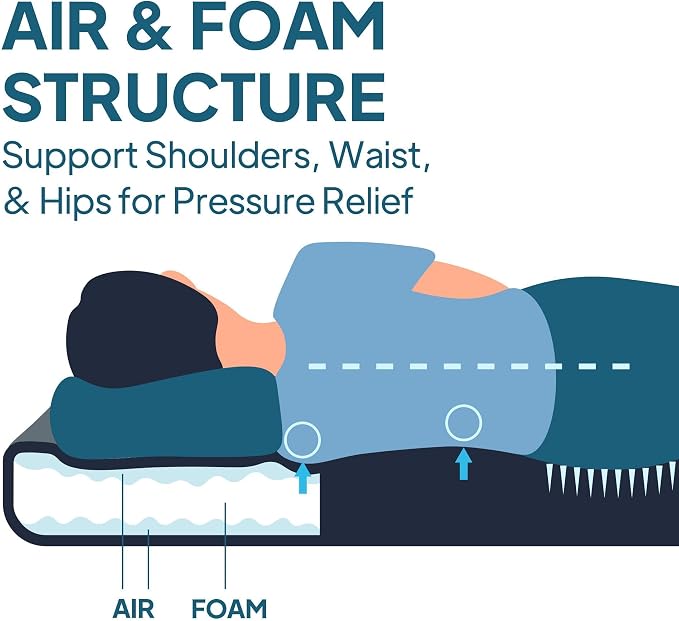
Here’s the problem with most camping mattresses: they’re either all foam or all air. Foam-only pads have a fixed firmness. You can’t make them softer or firmer. Air-only mattresses are like sleeping on a balloon – they can be adjusted, but they transfer motion, make noise, and lose air overnight.
Lost Horizon’s unique air + foam combination solves both problems.
How it works:
The mattress has a core of high-density foam. Surrounding that foam is an air chamber. You inflate the air chamber to your preferred firmness. The foam provides the baseline support and insulation; the air lets you dial in the feel.
Adjustability in action:
- Prefer a soft, plush feel? Inflate to about 70% capacity. The foam will do most of the work, and the air will give you a gentle cradle.
- Prefer a firm, supportive feel? Inflate fully. The air chamber locks the foam in place, creating a surface that rivals a high-end home mattress.
- Back pain? Start firm and then let a tiny bit of air out until you find the “sweet spot” where your spine stays neutral.
Compared to single-material pads:
| Feature | All-Foam Pad | All-Air Mattress | Lost Horizon Air+Foam |
|---|---|---|---|
| Adjustable firmness | No | Yes | Yes (with better range) |
| Bottom-out resistance | Poor after time | Yes (if no leaks) | Excellent |
| Motion transfer | Low | High | Very low |
| Noise | Silent | Squeaky/crinkly | Silent |
| Insulation (R-value) | Moderate | Poor (cold air) | Exceptional (R13) |
| Weight | Moderate | Low | Higher (but worth it) |
The personalized sleep experience: Your partner likes a firm mattress; you like soft. With most camping pads, one of you compromises. With this mattress, you can find a middle ground that works for both. Or, if you’re solo, you can tweak it night after night until it’s perfect.
Pro tip: Experiment at home first. Inflate the mattress, lie down, and let air out in small increments. You’ll find your ideal pressure. Mark that valve position for future trips.
Part 3: Silent and Stable – No More Squeaky, Crinkly Nights
If you’ve ever shared a tent with an air mattress, you know the sound. Every time you roll over: squeak-squeak-crinkle-whoosh. Every time your partner shifts: groooan. It’s like sleeping in a balloon factory.
The Lost Horizon mattress is virtually silent.
Why it’s quiet:
- The foam core absorbs vibrations and movement. When you shift your weight, the foam dampens the sound instead of transmitting it through an air chamber.
- The outer fabric is a soft, brushed material that doesn’t rub against itself noisily. Cheap air mattresses use slick vinyl that squeaks; this uses a quiet, tent-friendly textile.
- The air chamber is not a loose bladder – it’s integrated with the foam, so there’s no loose plastic to crinkle.
Stability matters too: On a pure air mattress, when you sit on the edge, the whole thing tilts. When your partner gets up, you bounce. On the Lost Horizon, the foam provides structural stability. Sit on the edge, and it compresses slightly but doesn’t launch you onto the ground. Your partner can get out of bed without waking you.
Couple-friendly design: The queen size (standard queen dimensions) gives both sleepers ample space. The motion isolation means one person’s tossing won’t disturb the other. It’s as close as you’ll get to a real bed in a tent.
For light sleepers: If you wake up at every little sound, this mattress is a lifesaver. No more waking yourself up every time you roll over. No more glaring at your partner because they moved an inch.
Part 4: Easy Inflation and Deflation – With Included Air Pump
One of the biggest frustrations with camping mattresses is the setup. Blowing up an air mattress by mouth takes forever and leaves you dizzy. Hand pumps are slow and tiring. Some self-inflating pads take 30 minutes to fully expand on their own.
Lost Horizon solved this.
Self-inflating base: The foam core naturally wants to expand. When you open the valve, the mattress will automatically draw in air and inflate to about 80% capacity on its own. This takes a few minutes – during which you can set up the rest of your camp.
The included portable air pump: For the final 20% and for fine-tuning firmness, use the included electric air pump. It plugs into a standard 12V car outlet (cigarette lighter) or a portable power station. The pump is compact, lightweight, and surprisingly powerful.
Inflation time: From completely flat to fully firm, the entire process takes about 2-3 minutes. The pump does the heavy lifting. You don’t break a sweat. You don’t get lightheaded.
Deflation is even faster: When it’s time to pack up, open the valve and let the air rush out. Then, use the pump’s deflation function (or simply roll the mattress while the valve is open) to remove almost all air. The pump can deflate a queen-sized mattress in about 1 minute. Then you roll it up, close the valve, and stuff it into the included carry bag.
Storage convenience: The mattress rolls up into a relatively compact bundle – not backpacking small, but small enough to fit in a car trunk or RV storage compartment. The carry bag has straps to keep it secure.
No more manual pumping: If you’ve ever used a foot pump or a hand pump for an air mattress, you know the misery. Lost Horizon’s electric pump eliminates that hassle entirely.
Part 5: Four-Season Insulation – R-Value 13 (Yes, Thirteen)
Let’s talk about the number that will shock anyone who knows camping gear: R-value of 13.
For context:
- A standard summer sleeping pad has an R-value of 1-2.
- A three-season pad has an R-value of 3-4.
- A high-end winter pad has an R-value of 5-7.
- An R-value of 13 is almost unheard of in a portable mattress.
What R-value means: It measures thermal resistance – how well the mattress insulates you from the cold ground. The ground is a massive heat sink. Even in a warm tent, the cold earth will suck heat from your body if you don’t have insulation underneath you.
Why R13 matters:
- True four-season use: You can camp on snow, frozen ground, or in sub-freezing temperatures and stay warm. The 13 pounds of foam create a thick thermal barrier.
- No more cold spots: On low-R-value pads, you feel cold radiating up through the pad. On the Lost Horizon, the cold stays where it belongs – under you, not in you.
- Winter camping made comfortable: If you’ve ever tried winter camping with a cheap pad, you know how miserable it is. This mattress makes cold-weather camping actually enjoyable.
Warm-weather performance: A high R-value doesn’t make you hot in summer. Insulation works both ways – it keeps ground cold from reaching you, but it doesn’t trap body heat excessively. The open-cell foam breathes, and you can adjust the air to your preference. Use it in spring, summer, fall, and winter without issue.
Comparative test: Place a cheap air mattress on snow. Within an hour, you’ll feel the cold. Place the Lost Horizon on snow. The foam blocks the thermal transfer. You’ll stay warm all night.
For campers who camp in shoulder seasons: Spring and fall camping often means cold nights. You don’t need a full winter rig, but you need more than a summer pad. R13 gives you a massive safety margin.
Part 6: Queen Size – Room for Two (or One Very Happy Camper)
The queen size is a generous 60 inches wide by 80 inches long (standard queen dimensions). That’s enough space for:
- Two average-sized adults with room to spare
- One adult who wants to starfish
- An adult and a child or dog
- Three small children (if they don’t kick)
Why queen over twin or double:
- Couples: No more fighting for space. No more one person hanging off the edge.
- Solo sleepers who sprawl: If you’re a restless sleeper, the extra width means you can roll without falling off.
- Family camping: A queen can serve as a family “bed” for snuggling or as a pad for two kids.
Fits in most tents: A queen-size mattress fits inside a standard 4-person tent or larger. Measure your tent floor before buying, but most dome tents and cabin tents accommodate a queen easily.
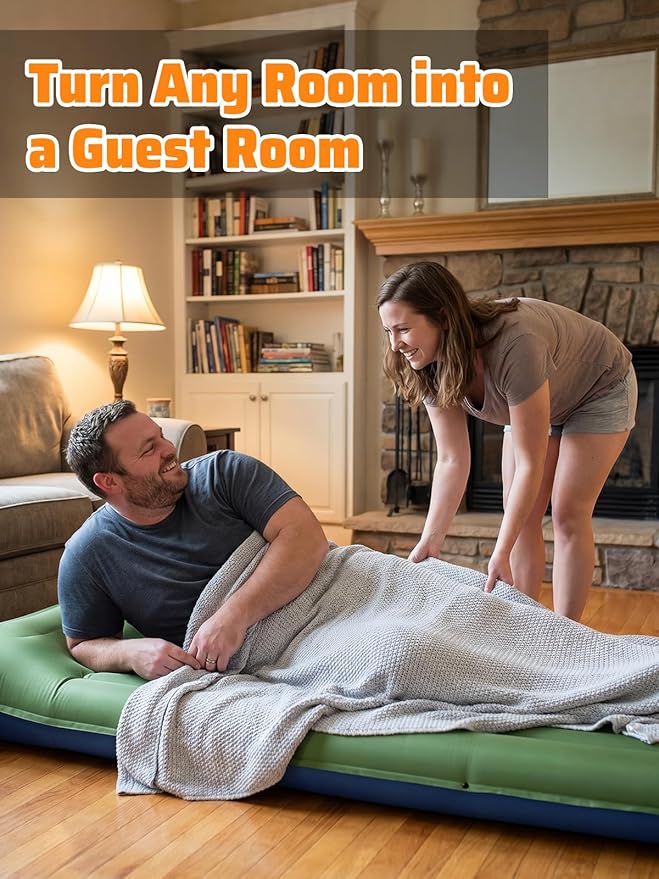
As a guest bed: This mattress isn’t just for camping. Use it at home when guests visit. It’s more comfortable than a lumpy sofa bed or a thin folding mattress. Inflate it in the living room or a spare bedroom. Your guests will thank you.
For RVs: Many RVs come with terrible stock mattresses – thin, hard, and uncomfortable. Replace that RV mattress with the Lost Horizon. It’s lighter than most RV mattresses, more comfortable, and rolls up for storage when you want extra floor space.
Part 7: Built to Last – Materials and Durability
Camping gear takes abuse. Rocks, tree roots, tent stakes, dog claws, and the general chaos of outdoor life. Lost Horizon built this mattress to survive.
Materials:
- Outer fabric: Heavy-duty, puncture-resistant nylon with a soft, brushed finish. It’s not the ultra-thin fabric used in backpacking pads. This is rugged, car-camping grade material.
- Foam core: 13 pounds of high-resilience foam. It doesn’t break down or lose loft like cheap foam. Expect years of regular use.
- Valves: Large, twist-style valves that are easy to operate, even with cold hands. They seal tightly and don’t leak.
- Seams: Welded and reinforced. No delamination.
Puncture resistance: While no air mattress is completely puncture-proof, the foam core provides a layer of protection. Even if the outer air chamber gets a tiny hole, the foam still provides cushioning. It won’t deflate completely like a pure air mattress.
Repairability: Minor punctures can be patched with any standard vinyl repair kit. Lost Horizon includes a patch kit? (Check the package – many come with one.) If not, a $5 bike tire patch kit works.
Care tips:
- Store the mattress unrolled and partially inflated in a cool, dry place (not compressed in a hot car).
- Clean with mild soap and water. Do not use harsh chemicals.
- Avoid dragging across sharp rocks or pavement.
- Keep away from campfires (obvious, but worth saying).
Warranty: Lost Horizon stands behind their products. Check the specific warranty details, but most quality camping gear brands offer at least a one-year manufacturer’s warranty.
Part 8: The Gray Color – Practical and Sleek
The mattress comes in gray – a neutral, understated color that hides dirt and camp grime. Unlike bright colors that show every smudge, gray looks clean longer.
Why gray is smart for camping:
- Hides dust and dirt: Tents get dirty. Gray doesn’t show every speck.
- Neutral matches any tent or RV interior: No clashing with your gear.
- Less visible at night? Actually a benefit – a bright orange mattress glows under moonlight. Gray blends in.
Aesthetic: The mattress has a clean, modern look. It doesn’t scream “cheap camping gear.” In a living room as a guest bed, it looks fine.
Not available in other colors? Probably not, but gray is the right choice for a functional piece of gear.
Part 9: Comparison – Lost Horizon vs. The Competition
Let’s see how this mattress stacks up against common alternatives.
| Feature | Lost Horizon Air+Foam | Cheap Air Mattress | Thin Self-Inflating Pad | Thick Memory Foam Topper |
|---|---|---|---|---|
| Thickness | 4.5″ | 8-10″ (but deflates) | 1.5-2″ | 3-4″ |
| R-value | 13 | 1-2 | 3-5 | 2-3 |
| Weight capacity | 440 lbs | 300 lbs | 250 lbs | N/A (not self-supporting) |
| Noise | Silent | Squeaky | Silent | Silent |
| Adjustable firmness | Yes | Yes | No | No |
| Self-inflating | Yes (base) | No | Yes | No |
| Includes pump | Yes | Rare | N/A | N/A |
| Packed size | Large (car camping) | Medium | Small | Large (no compression) |
| Best for | Car camping, guest bed, RV | Occasional use | Backpacking (lighter models) | Home only |
The verdict: For car camping and home guest use, the Lost Horizon dominates. It’s thicker, warmer, quieter, and more durable than cheap air mattresses. It’s far more comfortable than thin self-inflating pads. And unlike a memory foam topper, it’s portable and self-inflating.
Part 10: Real Customer Scenarios
Scenario 1: The Family Camping Trip
The Johnsons have two kids, ages 6 and 9. They drive to a state park for a long weekend. Dad used to sleep on a cheap air mattress that went flat by 2 AM. Mom used a foam pad that left her sore. The kids shared a twin air mattress that squeaked all night. This trip, they bring the Lost Horizon queen. Everyone sleeps on it – two adults and a kid in the middle. The mattress stays firm. No one wakes up sore. They buy a second one for the next trip.
Scenario 2: The Cold-Weather Hunter
Mike is a deer hunter in Wisconsin. November hunts mean freezing temperatures. He used to sleep on a cheap foam pad and shiver all night. He switched to the Lost Horizon. The R13 insulation keeps him warm even when the tent floor is frozen. The 4.5-inch thickness cushions his old joints. He finally sleeps through the night and wakes up ready for dawn.
Scenario 3: The Visiting In-Laws
Sarah and Tom have a small apartment with no guest room. When her parents visit, they sleep on a lumpy sofa bed. Her mom complains about back pain. They buy the Lost Horizon. Now the parents sleep on the living room floor on a queen-sized, adjustable, silent mattress. Her mom says it’s more comfortable than her bed at home. Sarah buys a second for their own camping trips.
Scenario 4: The RV Upgrade
The Garcias buy a used RV. The built-in mattress is thin, hard, and stained. Replacing it with a standard RV mattress costs $500+ and is heavy. They buy the Lost Horizon instead. It fits perfectly on the RV bed platform. It’s lighter, more comfortable, and a fraction of the cost. Plus, they can remove it for storage or use it outside the RV for camping.
Conclusion: Stop Suffering, Start Sleeping
Camping shouldn’t mean trading comfort for adventure. The Lost Horizon Air & Foam Camping Mattress gives you the best of both worlds: the support of a high-density foam core, the adjustability of an air chamber, and the insulation of an R13 winter pad. It’s 4.5 inches thick, supports 440 pounds, inflates in minutes with the included pump, and sleeps silently.
Yes, it’s too heavy for backpacking. But for car camping, RVs, guest beds, and basecamp luxury, it’s the best sleep you’ll ever get away from home.
Click “Add to Cart” now. Your back, your partner, and your camping experience will thank you. Sweet dreams, under the stars or under your own roof.
Product Summary:
- Product: Lost Horizon Air & Foam Camping Mattress
- Size: Queen (60” x 80”)
- Thickness: 4.5 inches
- Foam filling: 13 lbs
- Weight capacity: 440 lbs
- R-value: 13 (four-season insulation)
- Inflation: Self-inflating base + included electric air pump (1-minute deflation)
- Comfort: Adjustable firmness (air + foam combination)
- Noise level: Silent, stable, no squeaking
- Best for: Car camping, RV, guest bed, basecamp
- Not for: Backpacking (too heavy)
- Color: Gray