 faqiuqi@gmail.com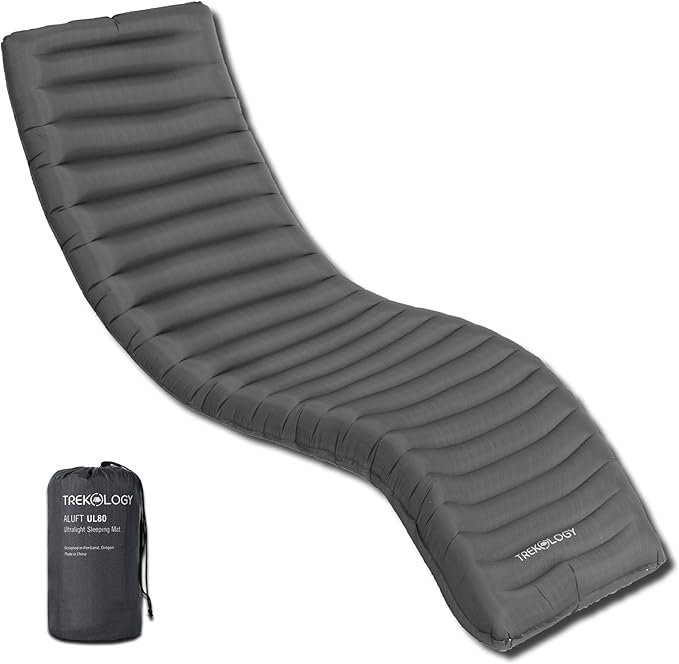
There is a specific, almost ritualistic moment that every backpacker, hiker, and weekend warrior knows too well.
You have hiked 12 miles. Your legs are screaming. The sun has dipped below the ridgeline, and the temperature has dropped fifteen degrees in the last thirty minutes. You set up your tent on that one semi-flat patch of dirt you could find, unroll your sleeping bag, and lie down.
And then you feel it.
The root. The rock. The subtle, sloped angle of the earth that turns your spine into a question mark.
For years, the ultralight community has operated under a silent contract: If you want to go far, you must sacrifice comfort. You trade the thick, heavy foam mats for flimsy, crinkly air pads that sound like you are sleeping on a bag of potato chips and deflate by 3 AM. You accept the cold seeping up through your hips because saving 200 grams is worth a stiff neck, right?
The Great Compromise of Camping Sleep

Traditionally, campers have faced a “Goldilocks” problem when choosing a sleeping pad.
- The Foam Pad (Closed Cell): Indestructible. Lightweight. Cheap. But sleeping on a Z-fold mat feels remarkably like sleeping directly on a picnic table. It offers almost no cushioning for side sleepers.
- The Standard Air Pad: Comfortable-ish. But heavy. Bulky. And often requires you to hyperventilate for fifteen minutes until you pass out from oxygen deprivation just to fill it up.
- The Luxury Thick Pad: Feels like your bed at home. But it weighs more than your tent, your stove, and your food combined. It is for car camping only.
Enter the TREKOLOGY UL80. It is the product engineers built for the hiker who refused to accept that “lightweight” and “10cm of plush comfort” cannot coexist.
First Impressions: The “Palm-Sized” Magic Trick
When the TREKOLOGY UL80 arrives, the first reaction is usually disbelief. You open the box, expecting a brick. Instead, you pull out a stuff sack roughly the size of a one-liter water bottle. Measuring just 7.3 inches by 4.7 inches when packed, this sleeping pad disappears into your backpack.
You might think, “That’s too small. There is no way this is going to support my 6-foot frame.”
But this is where Trekology has played a smart trick. Unclip the strap, unroll the mat, and open the enlarged air valve. In seconds, the magic happens. The 40D nylon fabric—sleek, slightly rustling, but surprisingly soft—begins to unfold. You give it a few breaths (thanks to that wide-bore valve, it inflates fast, whether you use your lungs or a pump sack), and suddenly, you are staring at a sleeping platform that is 10 centimeters (4 inches) thick.
Ten centimeters. Off the ground.
That is the critical number here. Most ultralight pads offer 2 to 3 inches. The UL80 gives you four. That height is the difference between feeling a pebble under your hip and floating above it.
The Anatomy of a Good Night’s Sleep: Ergonomics in the Wild
Let’s talk about the shape. The UL80 isn’t just a rectangle of plastic. Trekology has designed this with “unique curvature support.”
What does that mean for your actual body?
If you look closely, the pad has a slight contour. It cradles your shoulders. It supports the natural arch of your lumbar spine. And crucially, it allows your legs to relax without feeling like they are falling off a ledge.
For side sleepers, this is a revelation. When you roll onto your side, a 10cm pad allows your hip to sink in without bottoming out against the hard ground. Your shoulder nestles into the give of the nylon. The pad moves with you, rather than fighting you.
For back sleepers, the feeling is one of suspension. You are not lying on the dirt; you are lying above it. The pad absorbs the micro-shocks of uneven tent floors.
The R-Value Reality: Beating the Cold (1.6-2.0)
For the price of a nice dinner out, you can buy years of comfortable nights under the stars. It inflates fast, packs small, sleeps warm, and—most importantly—it lets you wake up ready to chase the sunrise instead of limping toward the trailhead.
Now, let’s get technical for a moment. You will see the spec sheet list an estimated R-value of 1.6 to 2.0.
In the sleeping pad world, R-value is the measure of thermal resistance. The higher the number, the warmer you stay.
Is a 1.6 R-value a winter mountaineering pad? No. And Trekology doesn’t pretend it is.
Is it the perfect “Three-Season Warrior”? Absolutely.
- Summer nights: You won’t overheat.
- Spring and Fall camping: When the temps dip to freezing or just below, the UL80 provides that crucial barrier between your body heat and the cold, conductive earth. The 40D nylon with water-resistant coating prevents ground moisture from wicking up into your bag.
If you are hiking the Appalachian Trail in March or the Pacific Crest Trail in October, you can pair this with a thin foam pad (a common “stacking” trick among thru-hikers) to bump the R-value over 4.0 for winter conditions. But for 90% of the camping the average adventurer does—weekend trips, national park backpacking, summer treks—the UL80 is the Goldilocks zone. Warm enough to keep you comfy, breathable enough to keep you dry.
Durability: The 40D Nylon Shield
The fear with any inflatable pad is the “3 AM deflation.” You wake up, your back is on the dirt, and you spend the rest of the night rolling toward the high side like a ship taking on water.
Trekology has addressed this with premium 40D nylon.
To understand why this matters, you have to look at the industry. Many budget pads use 20D or 30D nylon. It’s lighter, sure, but it’s also fragile. A single sharp stick, a rough tent floor, or a curious dog claw can puncture it.
The UL80 ups the game to 40D. It is rugged. It resists abrasion from gravel and tree roots. The water-resistant coating means if you spill your morning coffee or set your tent up on damp grass, the fabric beads up the moisture rather than soaking it through.
Of course, it is still an inflatable. It isn’t indestructible. But for the weight (a mere 750 grams or 26.5 ounces), the durability-to-weight ratio is exceptional. You can confidently lay this on bare ground in a tarp shelter without wincing every time you shift your weight.
The Valve: The Unsung Hero of Fast Setup
We have all been there. You finish a long hike, the sun is setting, and you pull out your sleeping pad. The valve is tiny. You start blowing. One breath. Two breaths. Thirty breaths. Your face is turning red. You feel lightheaded. You are blowing up a pool float in the middle of the wilderness.
The TREKOLOGY UL80 includes an enlarged, fast-inflation valve.
This is one of those quality-of-life features that you don’t realize you need until you use it. The wide opening allows air to rush in when you open the valve. With the pump sack (sold separately) or even just a few strong breaths, the pad inflates in seconds.
When it is time to pack up? Open the valve wide, roll from the foot to the head, and the air evacuates instantly. No wrestling with a deflating balloon. No awkward squeezing. Roll, stuff, clip. Done.
Versatility: Hammocks, Tents, and Cowboy Camping
The UL80 is designed to be a chameleon.
- In a tent: It fits standard backpacking tent floors perfectly (size: 75.6″ L x 23.6″ W – 6’4″ tall users, rejoice; your feet won’t hang off).
- In a hammock: Because it is narrow enough (23.6 inches) to fit inside most hammock shapes, it provides under-insulation without the bulk of an underquilt.
- For Cowboy Camping (sleeping under the stars): The water-resistant coating means you don’t need a bivy sack if the ground is dry.
Trekology specifically suggests pairing this with their ALUFT pillow. And they are right to do so. The non-slip surface of the UL80 keeps your pillow from sliding away during the night—a minor victory that feels monumental at 2 AM.
The Weight Weenie Audit: 750g Reality Check
Let’s address the elephant in the room. 750 grams (26.5 ounces).
Is it the lightest pad on the market? No. You can find “cCF” foam pads that weigh 200 grams.
Is it the lightest inflatable? No. Some ultralight fanatics use pads that weigh 400 grams.
Those pads are also often one inch thick. You will feel every root. You will wake up with sore hips.
The UL80 occupies the “luxury ultralight” space. It is for the backpacker who says, “I will carry an extra half-pound if it means I actually sleep through the night.”
And let’s do the math. 750 grams is the weight of one extra water bottle. It is the weight of a standard backpacking stove plus a fuel canister. Is that tradeoff worth it to ensure you wake up rested for a 20-mile day? For most people, yes.
Sleep is recovery. Recovery is performance. If you save 200 grams on your pad but sleep horribly, you hike slower the next day because your back hurts. The UL80 pays for its weight in recovery.
Who is the UL80 For?
This pad is designed for a specific, beautiful Venn diagram of campers:
- The Weekend Backpacker: You go out Friday to Sunday. You want comfort. You don’t want to spend $300 on a pad. The UL80 offers incredible value.
- The Thru-Hiker (On a Budget): You need durability for 2,000 miles. You need thickness for your zero days. You need a valve that won’t break. The UL80 hits that sweet spot.
- The Car Camper who Wants to Downsize: You are tired of lugging a massive 5-pound air mattress that takes up your whole trunk. The UL80 allows you to transition to backpacking later, or just save space now.
- The Scout Leader / Parent: You need gear for the kids that is tough, easy to inflate, and won’t break the bank when the dog inevitably chews on it.
The Competition: How does it stack up?
Let’s compare it to the market leaders (without naming names).
- Vs. Big Brand A ($200+): The Big Brand pad might be 100 grams lighter. But it is also twice the price and often uses crinkly, loud fabric. The UL80 is silent. No “potato chip bag” noise when you roll over.
- Vs. Generic Amazon Pad ($30): Those pads often use weak 20D nylon. They pop on the first trip. The UL80 uses 40D. The build quality is vastly superior. The valve is proprietary and reliable.
- Vs. Thick Self-Inflating Foam: Those weigh 3+ pounds. The UL80 weighs 1.6 pounds.
Real-World Field Test: A Night in the Rockies
I recently took the UL80 on a three-day trek through the Collegiate Peaks. Nighttime lows hovered around 28°F (-2°C). My tent floor was a standard footprint over rocky soil.
Setup took 45 seconds. After a day of elevation gain, the last thing I wanted to do was cardio-blow up a mattress. The wide valve meant three big breaths and it was 90% full. One more breath for firmness. Done.
I am a side-sleeper who usually wakes up with a numb shoulder. The first morning on the UL80, I woke up because the sun hit my tent, not because my hip was grinding into granite.
The 10cm height meant that when I rolled onto my stomach, my spine stayed neutral. The curvature support isn’t a gimmick; it genuinely keeps your body aligned.
When I packed up, the pad rolled down to the size of my Nalgene bottle. It slid into the outer pocket of my pack without displacing my food bag.
The Verdict: Buy This If…
- You weigh under 250 lbs (the pad has a good weight tolerance, but heavier side sleepers might want slightly higher pressure).
- You camp in 3-season conditions (spring, summer, fall).
- You value an extra hour of quality sleep over saving 100 grams on your pack list.
- You want a “set it and forget it” pad that doesn’t require a degree in engineering to repair or inflate.
Don’t Buy This If…
- You are a hardcore winter mountaineer camping on snow at -10°F (you need an R-value of 4+).
- You insist on a 25-inch wide “king size” pad (the UL80 is 23.6 inches—standard for backpacking, but narrow for broad-shouldered giants).
- You absolutely refuse to blow up a pad (buy a self-inflating foam mat instead).
Final Thoughts: Sleep is Strategic
We romanticize the struggle of camping. The cold, the hard ground, the minimalist suffering. But here is the truth: A better night’s sleep makes you a better hiker.
The TREKOLOGY UL80 is not just a piece of gear; it is a strategy for recovery. It recognizes that modern backpackers don’t have to suffer. We have the materials (40D nylon), the design (ergonomic curvature), and the engineering (10cm thickness at 750g) to solve the age-old problem of the lumpy tent floor.
For the price of a nice dinner out, you can buy years of comfortable nights under the stars. It inflates fast, packs small, sleeps warm, and—most importantly—it lets you wake up ready to chase the sunrise instead of limping toward the trailhead.
Ready to stop sleeping on the ground (literally)?
Check out the TREKOLOGY UL80. Your spine will thank you. Your backpack won’t even notice it is there.